




REVEALED: Real cost of joining EU's Customs Union as Britons issued warning that food price would be 'dearer'

Taking Britain back into the EU Customs Union would hike prices of ordinary groceries, new research has found.

It comes as Andy Burnham has sought closer ties with Brussels, telling the Commons it would be a "major dereliction of duty" not to pursue a deeper relationship.
Despite insisting he will stick to Labour's 2024 manifesto promises to keep Britain out of a Customs Union, the Prime Minister has called for an “honest conversation" on the subject and a “reset” with the bloc.
Ahead of the UK-EU summit later this month, an analysis by Brexit Facts4EU, Stand for Our Sovereignty, and The Campaign for an Independent Britain has laid bare the cost of a realignment on the Customs Union.
The research, drawing on HMRC customs data and the EU's Taric tariff, warns that closer alignment with the EU's external levies regime could leave British consumers paying more for a range of grocery staples.
Red kidney beans currently face a zero per cent tariff under the UK's arrangements, compared with a standard EU third-country duty of 17.6 per cent, the analysis found.
Fresh apples are another example, with the UK applying a zero per cent tariff to certain imports while the EU imposes a nine per cent base tariff.
Additional charges can apply under the bloc's entry-price system, potentially taking the effective tariff considerably higher on cheaper shipments.

“We would be buying dearer French Golden Delicious instead of cheaper Australian and New Zealand apples with more choice of varieties,” Tory peer Lord Redwood said.
Raw cane sugar could also become more expensive, with Facts4EU claiming that EU duties could translate into an overall import tax of between 56 and 72 per cent, compared with zero-rated imports under a UK tariff quota.
The report also warned that the EU introduced variable weekly tariffs on certain imported agricultural products, arguing that this could create additional uncertainty and administrative costs for British retailers.
“When the UK left the EU Customs Union, we removed tariffs completely on 2,000 products or 21 per cent of our imports, and cut them on another 4,747 or 50 per cent of foreign goods,” Lord Redwood explained.
LATEST DEVELOPMENTS
- British food standards realigned with EU for first time since Brexit as pivotal summit approaches
- Andy Burnham to push ahead with 'Brexit reset' EU youth mobility scheme before Christmas
- Germany vows to help Andy Burnham reverse Brexit as Prime Minister weighs up second EU referendum

"We had no need for many of these tariffs because we did not produce or grow the items ourselves. We were made to impose them to protect EU producers at the expense of our consumers. Cutting them was good news for shoppers.
"Today we are living through a surge in the cost of living so the last thing we should be doing is imposing EU tariffs on so many things to put up prices,” he insisted.
At the same time, UK agricultural exports to the EU currently face long border days and require Export Health Certificates, which typically cost between £113 and £200 per certificate.
Other food products, such as apples, require Phytosanitary Certificates, which cost about £25 each, plus inspection fees of at least £127.60 per consignment.

These costs are high for British farming and businesses, as 58 per cent of all UK agricultural exports go to the EU and are therefore subject to these restrictions.
Nevertheless, Lord Redwood rejected claims that closer economic ties with the EU would necessarily improve Britain's trading position.
“All the time we were in the EU we ran big deficits. Their laws, taxes and tariffs made us import too much and export too little. Non-EU exports even before Brexit grew more quickly than sales to the EU.
“Our trade has been expanding well with non-EU; the bigger part of our total, helped by some good new trade Agreements we could only negotiate and sign once out of the EU.

"It would be self-harm on a grand scale to dump these new Agreements and sandbag our trade with the faster-growing rest of the world. We would end up poorer, importing more and dearer EU goods, food and energy," he declared.
Facts4EU pointed to the £84.3billion trade surplus the UK enjoyed after inking independent trade deals with Australia, New Zealand and Singapore.
The direction the UK will take towards the EU remains to be seen, with the Prime Minister saying he was "not prepared to revisit the red lines in our manifesto" regarding the bloc.
Mr Burnham has insisted that he would seek no major change in Britain’s relationship with the EU this Parliament, amid speculation he could call an early General Election.

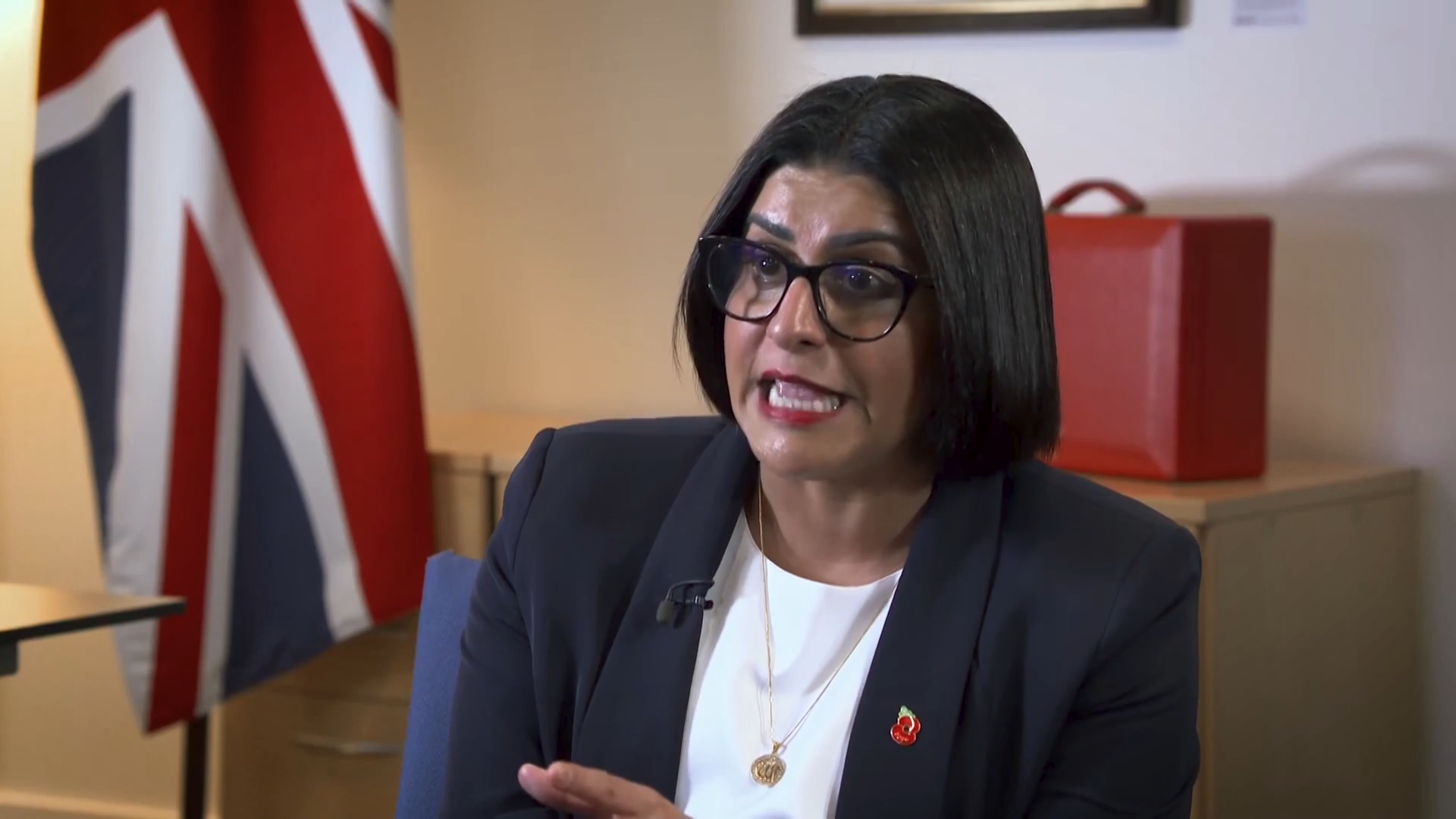
Responding to the report, a Government spokesman said: "There has been no proposal to rejoin the Customs Union.
“Instead, we are building an ambitious, close relationship with the EU that will add up to £9billion a year to our economy, support industry and create more opportunities for young people across the UK.
“Far from increasing prices, our agri-food and drink trade deal will end the costly paperwork tax that has harmed businesses and pushed up supermarket prices on everyday items like sugar, apples and beans,” they added.
Our Standards: The GB News Editorial Charter