









Carbon taxes 'putting Britain's refineries at risk' as Labour handed ultimatum

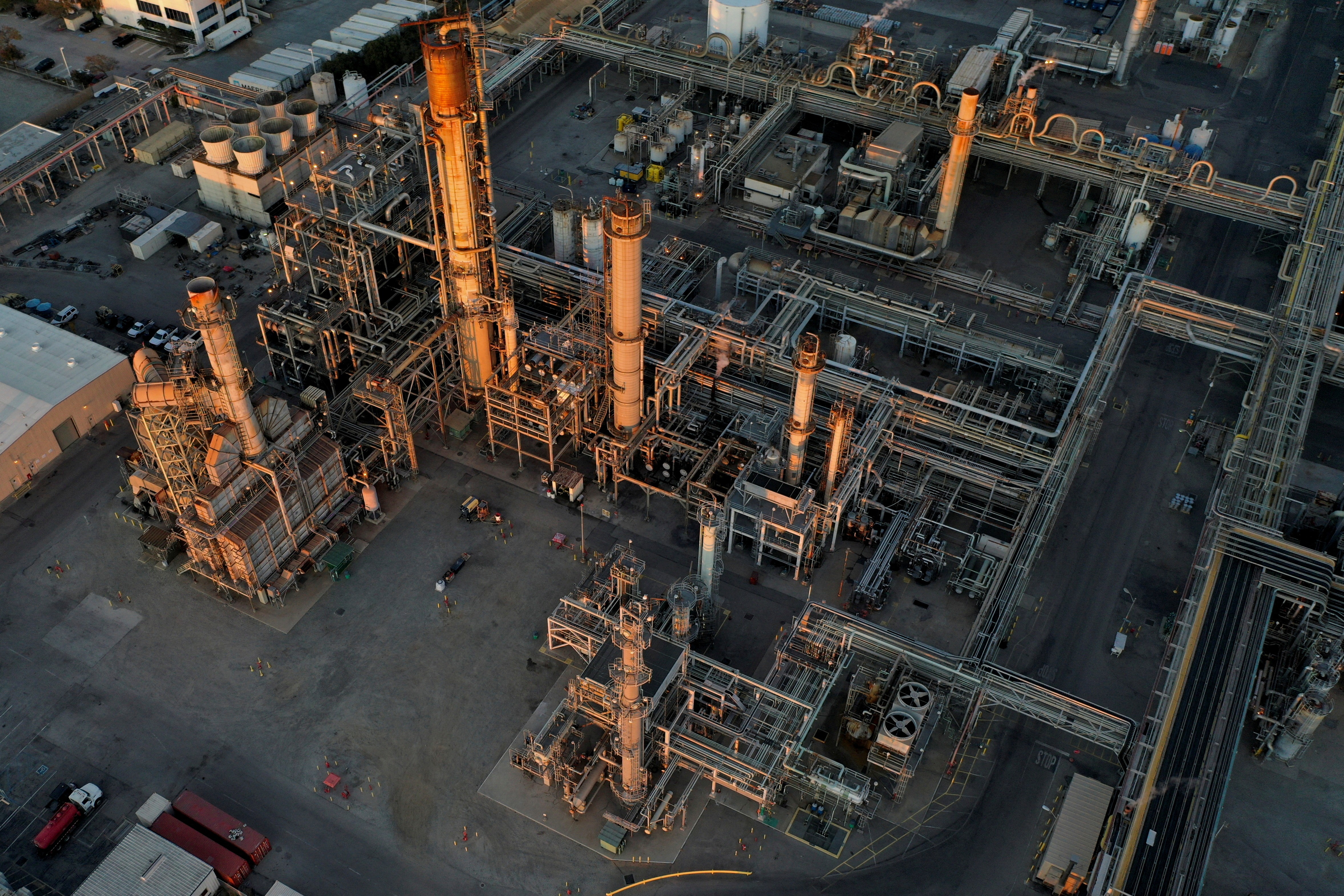
Carbon taxes are putting the futures of Britain's refineries at risk while doing little to tackle global emissions, a new report claims.

The country’s remaining four refineries face charges of £200million a year thanks to a tax regime designed to encourage decarbonisation. But global competitors do not shoulder the same costs, meaning it is cheaper for them to manufacture essential fuel products, says energy analyst Kathryn Porter.
This has led to “carbon leakage" – where the same product is imported to the UK because of lower costs, despite often being manufactured with higher overall emissions. Ms Porter, who runs energy consultancy Watt-Logic and who authored the report, said the "deeply irrational" taxes were "destroying domestic industry" and should be ditched.
In Fuel, Refineries and the UK ETS: What policymakers need to know, she writes: “Net Zero requires that carbon costs be applied to domestic producers. Energy security requires that domestic production capacity be maintained.”
She continues: “This is the central failure of carbon pricing: by making domestic industry so uncompetitive that it closes in favour of more carbon-intensive capacity elsewhere in the world, it raises global emissions while inflicting irreversible economic damage to the UK.”
Refineries are the “backbone of UK energy”, according to Elizabeth de Jong, Chief Executive of the trade body Fuels Industry UK. Refineries contribute £11billion a year in exports and employ around 100,000 people in the wider economy.
They process crude oil into petroleum products, including petrol, diesel, jet fuel and feedstocks for industry. But this all needs huge amounts of heat and power, meaning high emissions.
Britain, like Europe, charges manufacturers for carbon pollution. Under the Emissions Trading Scheme (ETS), the most energy-intensive producers pay per tonne of carbon they emit.
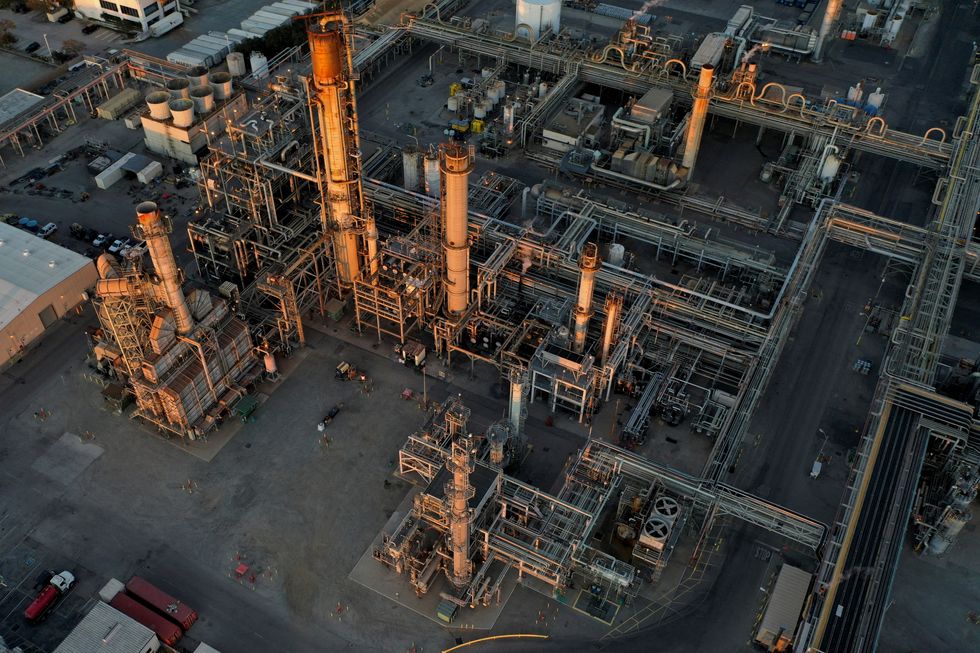
Ms Porter says the UK's refineries jointly face paying ETS charges of £200million a year. They receive an allocation of free carbon credit, which diminishes over time.
When this is taken into account, the current cost difference between UK refineries and those with no carbon regime is estimated at £540million a year. Five refineries have closed since 2005, with two – Grangemouth and Lindsey – shutting their doors in 2025 alone.
In what Ms de Jong has said is a direct consequence of these closures, Britain has gone from being classed as a “low risk / high resilience” nation to “high risk / low resilience” in relation to diesel and jet fuel. Ms Porter questioned whether ETS now served any purpose beyond taxation.
Refineries had taken huge steps to decarbonise, she said, pointing out it was in their interests to operate as efficiently as possible. But remaining schemes such as carbon capture – where waste CO2 is piped into sealed chambers beneath the sea floor – were huge undertakings, not viable without “considerable” Government support.
LATEST DEVELOPMENTS
- Heating oil homes to get compensation after Iran war price hikes
- Britain has ‘almost no gas in storage’ ahead of winter, energy boss fears
- Britain turns to gas when wind fails in heatwaves despite Net Zero push, data reveals
She writes: "The UK Emissions Trading Scheme was designed to encourage decarbonisation, but after decades of energy efficiency investments by the industry, there is little further meaningful decarbonisation that can be economically delivered in the refineries sector. This means the ETS is now simply a tax, and one that cannot be passed through to consumers who can buy imported refined products that are exempt from carbon taxes."
A further difficulty is refineries are not covered by an import scheme designed to shield against carbon leakage. Other industries, including steel, will receive some protection via a carbon import charge (CBAM).
Introduced next year, it will see certain imports charged to reflect their carbon content, levelling the playing field on costs. The Treasury is understood to be examining the feasibility of bringing refined products into a CBAM, although this will not be possible by January 2027, when it first comes into force.
Ms Porter says this means "the issue of carbon leakage will not be solved". She says: "This is a material threat to the future of the remaining UK refineries and must be addressed as a policy priority if the sector is to survive."
She said the overall effect of ETS was to raise offshore emissions while damaging domestic industry. She explained: “Britain has already lost two refineries in little more than a year and we are now down to just four. Yet government policy continues to make those remaining sites less competitive against overseas refineries which do not face the same carbon costs.
“The fundamental problem is that the ETS cannot incentivise investments which don’t exist. Refiners already have every commercial reason to improve efficiency, while carbon capture and hydrogen are not currently commercially viable without government support. If another British refinery closes, our demand for diesel or jet kerosene won’t disappear, we will just import more instead.
"The emissions will not be eliminated, they will simply move somewhere else, and in many cases that somewhere else involves higher emissions. That’s not decarbonisation, it’s deindustrialisation and offshoring. The UK needs to stop confusing lower territorial emissions with decarbonisation. An environmental policy which exports emissions, destroys domestic industry, increases import dependence and raises global emissions is deeply irrational “It’s time to abolish the ETS."
The Government has been contacted for comment.
Our Standards: The GB News Editorial Charter