








Tony Blair's think tank says Britain's energy strategy needs a 'fundamental reset' amid spiralling costs

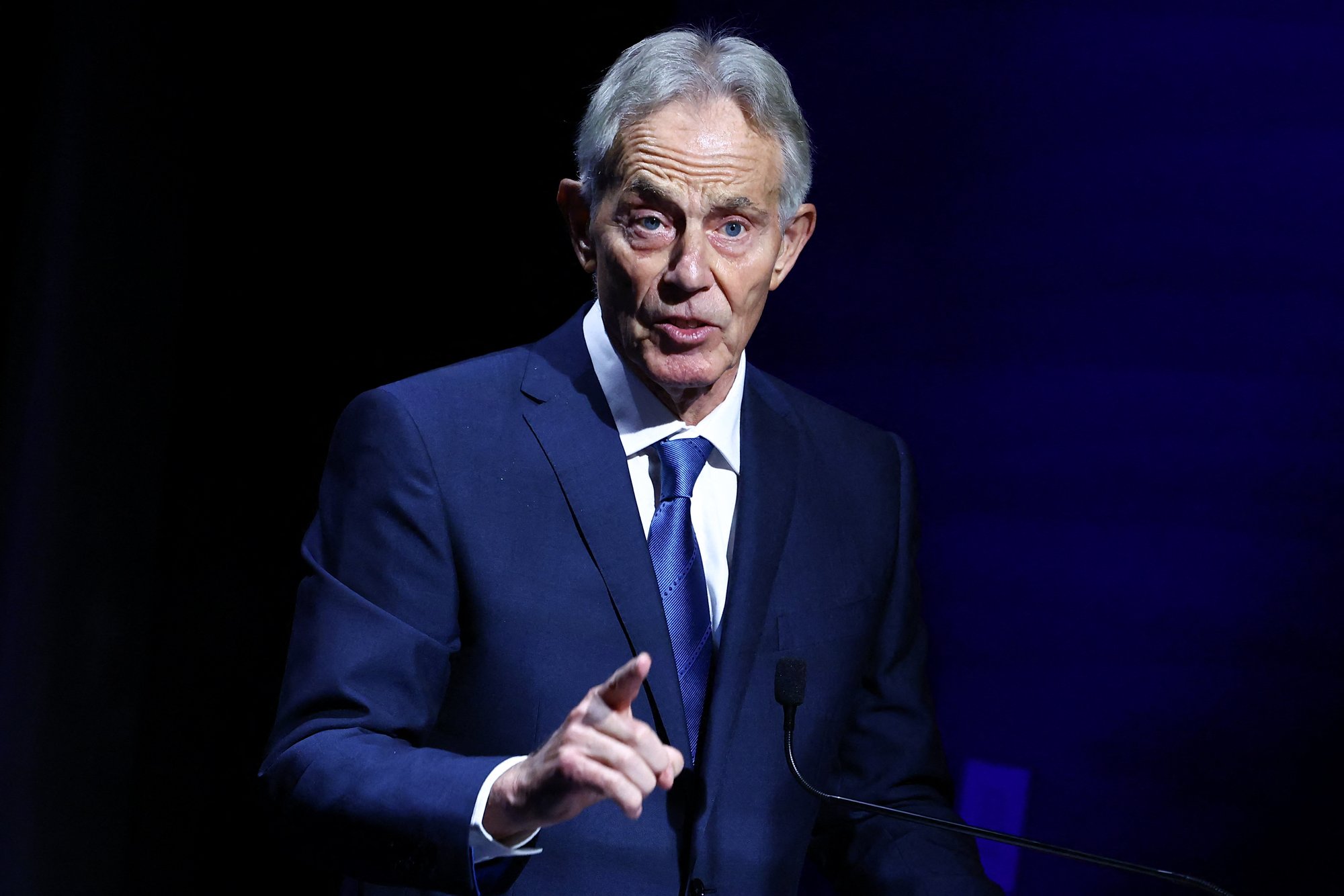
Britain's energy strategy needs a "fundamental reset", with affordability and security given priority over Government deadlines, Sir Tony Blair's think tank has said.

In a new paper, the Tony Blair Institute (TBI) called for the flagship Clean Power 2030 plan - an aim for at least 95 per cent of electricity to be generated from clean sources by the end of the decade - to be replaced with a "Cheaper Power" mission.
Measures should include businesses being rewarded for locating in areas where wind power would otherwise be wasted because of grid bottlenecks, helping to cut expensive curtailment costs, it said.
The report, Cheaper Power, Stronger Britain, said the Government's 2030 target has created "the wrong hierarchy" for energy policy, meaning affordability and security have become "secondary objectives".

Focusing instead on making electricity cheaper would speed up the shift from fossil fuels and strengthen Britain's energy security and competitiveness, said Tone Langengen, the think tank's Director of Climate and Energy Policy.
She also called for work to restart at Rosebank, Britain's largest untapped oil field. But she said that the 2050 target for reaching Net Zero should remain.
Her paper, released ahead of tomorrow's Budget, highlighted curtailment costs as a warning sign in the UK energy system.
These are incurred when wind farms, often in remote locations, generate more power than the grid can safely dispatch. The wind generator is paid to turn down while other generators, nearer demand, are paid to replace it.
Britain has spent more than £1.7 billion this year on curtailment, the paper says. At the same time, businesses seeking new grid connections can face waits of up to 15 years.
Ms Langengen said: “Britain is paying wind farms to reduce their output at the same time as businesses are struggling to get the electricity they need. That is a clear sign that our energy strategy needs to change."
She said that the Budget should introduce a targeted programme to attract businesses to areas with high levels of curtailment. This would see wind power that would otherwise be wasted used productively.
Businesses that reduced the costs of managing grid constraints should share in the savings, she said. Those that required 24/7 power, such as datacentres, could balance wind power with on-site generation, when required.
In the longer term, she said, work should be focused on faster grid delivery. An expanded grid would mean less wasted wind because more of the power could be carried to demand.
She explained: “Clean energy remains Britain’s future, but the test should be whether we can turn it into cheaper, reliable power that households and businesses can access.
"The government should replace Clean Power 2030 with a Cheaper Power mission – keeping Net Zero as the destination, while putting affordability, security and electrification at the heart of how we get there.
“The Budget can start now by rewarding businesses that use wind power the grid would otherwise be unable to use.
"The ten-year plan must then tackle the deeper problems in our grids, markets and energy system so Britain can turn its energy resources into a competitive advantage.”
The paper further calls for drilling to re-start at Rosebank, Britain's largest untapped oilfield. Work there has stopped after a legal challenge on climate grounds.
Last week, Energy Secretary, Miatta Fahnbulleh, approved Jackdaw, a gas field that had faced a similar legal challenge.
She is still considering the case for Rosebank.
Ms Langengen said that the field could contribute billions to the economy.
She said: "Following the approval of the Jackdaw gas field in the North Sea, ministers should approve the Rosebank oil and gas field, and establish a stable policy and fiscal framework for further commercially viable North Sea projects.
"Rosebank should signal confidence in the basin’s remaining future, giving operators and suppliers the certainty to commit capital, retain skilled workers and maintain the infrastructure on which subsequent developments will depend. Isolated approvals amid continuing uncertainty will not provide that confidence.
"Delay risks accelerating the basin’s decline."
A spokesman for the Department for Energy Security and Net Zero said: “We are making significant progress in reaching our clean power target, which has built a huge amount of momentum and confidence in the system.
“Last year, almost two-thirds of Britain’s electricity generation came from clean power. We have seen over £110 billion in private investment announced into clean energy and we are working in partnership with industry on reaching this target.”
Our Standards: The GB News Editorial Charter