






Rejoining the EU could cost Britons dearly as new forecast predicts grim rise in food costs

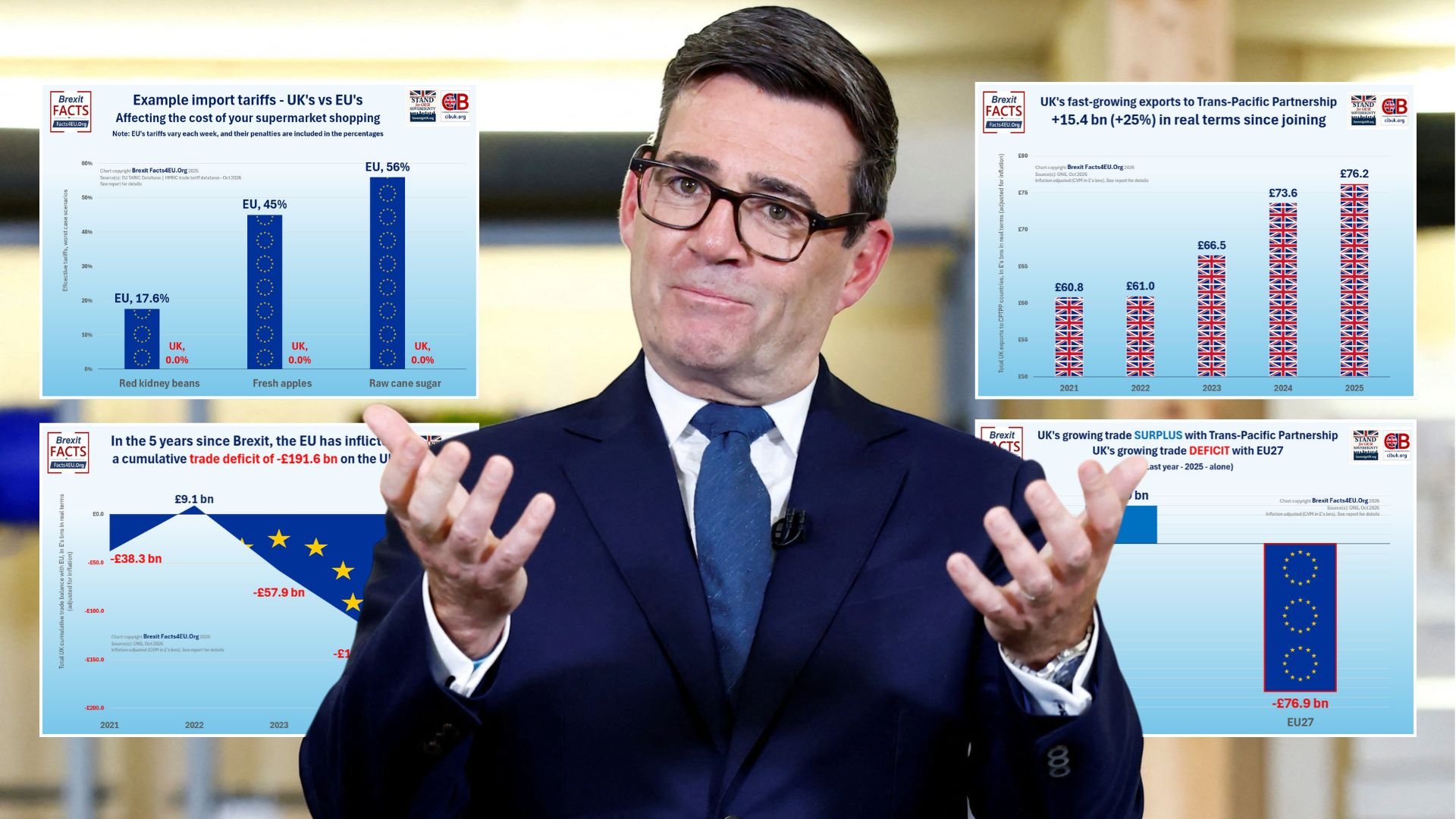
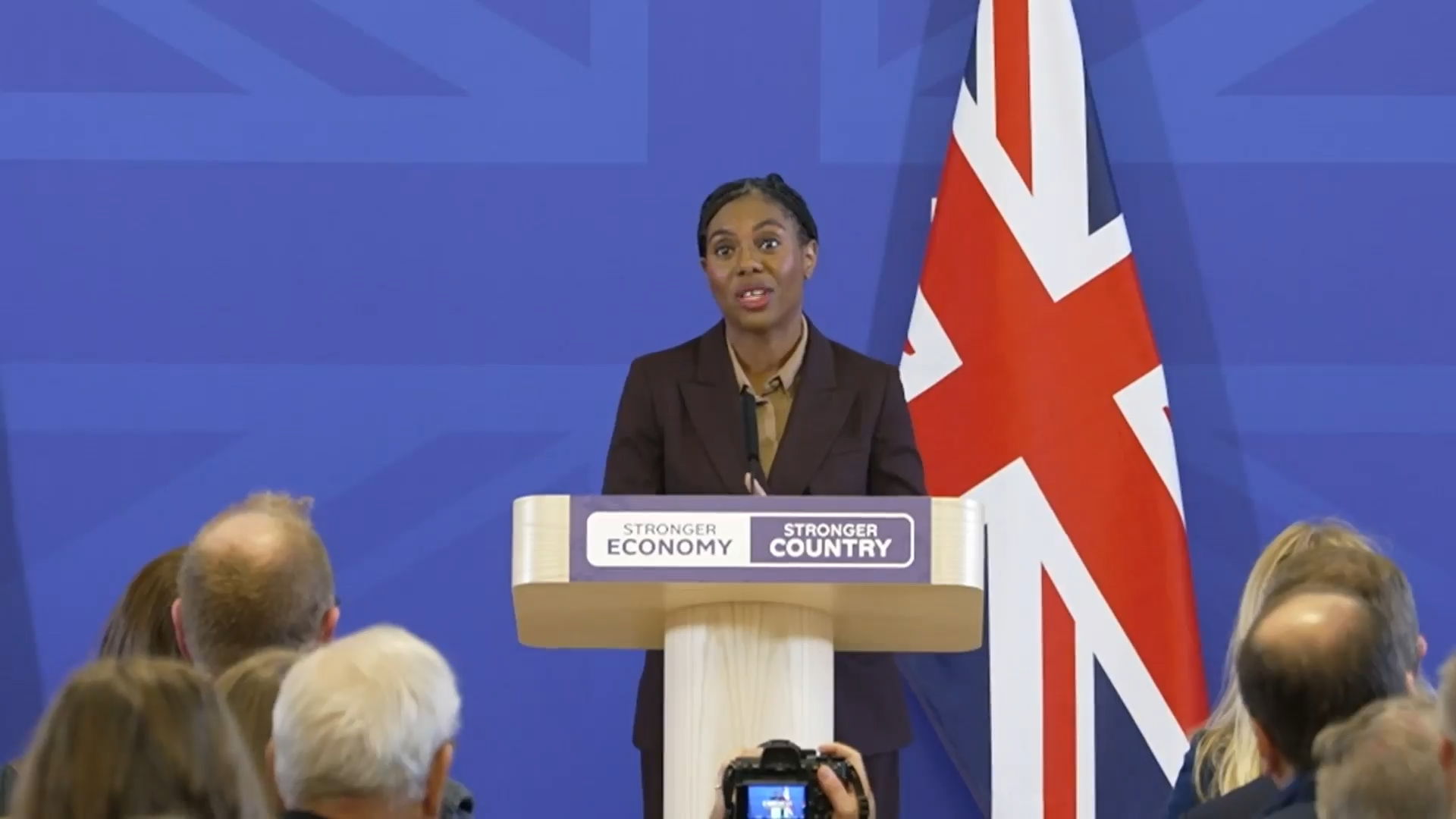
Andy Burnham has said that one of the EU reset options on his table is joining the EU’s Customs Union.

Using the latest official data, this report reveals how this would put up prices, cost tens of billions, and ruin relationships with countries with which the UK has successfully negotiated trade agreements.
This report from the Brexit Facts4EU think tank, alongside Stand for Our Sovereignty and The Campaign for an Independent Britain (CIBUK.Org), looks at what joining the Customs Union (CU) would mean for British consumers and the UK’s economy.
To set the scene, the US is the UK’s largest single export market - by a very long way - and it's unhappy with Andy Burnham's EU direction.
United States trade representative Jamieson Greer told the FT last month: "Britain has fundamentally failed to capitalise on Brexit... [London is] continuing to align with EU-made rules and keeping its market closed to American goods.
"That’s how we interpret it... based on my conversations with the UK, where I say, ‘Hey, you’re free of the EU. Why don’t you liberalise a little bit, accept goods made to American standards?’ And they say, ‘Well, we have to wait and see what the EU says about it.’
"You know that is a problem for us and that’s challenging."
And when asked whether the UK was actively using its regulatory freedom, Mr Greer answered: "No, they're not."
The UK consumer - three examples from a checkout basket

Live customs logs from HMRC and Brussels TARIC databases expose the hidden, indigestible extra costs built into the EU's defensive external tariff regime. These three grocery examples show the potentially alarming effect on our weekly shop.
Red kidney beans: Protecting the budgets of British households, post-Brexit UK trade policy dropped the duty to a flat zero per cent tariff.
The EU restricts global imports to protect its canneries, slapping a heavy 17.6 per cent standard third-country duty onto these basic staples. Entering the EU CU would trigger a wholesale price spike for a product found in millions of British kitchens.
Fresh apples: The UK has an out-of-season window where imported apples attract a zero per cent tariff, taking advantage of cheap southern hemisphere fruit to keep supermarket prices keen and stable.
Conversely, Brussels applies a nine per cent base tariff with added cash penalties up to €23 per 100kg when a low-cost shipment falls below the EU's entry-price floor. This creates an effective tax rate exceeding 45 per cent.
Raw cane sugar: Under post-Brexit freedoms, this has a flat zero per cent tariff via a 325,000-tonne ‘Autonomous Tariff Quota’, keeping imports cheaper for domestic refineries like Tate & Lyle.
Joining the CU could add an EU fixed penalty of €339 per tonne, which translates to a massive 56-72 per cent total import tax that would hit every independent bakery and confectionery manufacturer.
On Christmas Eve, the EU Commission introduced variable weekly tariffs on products being imported into the bloc. It means buyers constantly have to check before they buy anything, simply to calculate if a commercial profit is possible.
The British status quo: The UK operates its own predictable UK Global Tariff, meaning British supermarkets can import food at flat, stable tariff rates without any weekly interference from Brussels.
The Customs Union threat: EU alignment would force British retailers into a volatile, weekly price-monitoring system, exposing supply chains to significant administrative time and costs. Checkout prices would inevitably surge.
Lord Redwood told GB News: "When the UK left the EU Customs Union, we removed tariffs completely on 2,000 products, or 21 per cent of our imports, and cut them on another 4,747 or 50 per cent of foreign goods.
"We had no need for many of these tariffs because we did not produce or grow the items ourselves. We were made to impose them to protect EU producers at the expense of our consumers. Cutting them was good news for shoppers.
"Today we are living through a surge in the cost of living so the last thing we should be doing is imposing EU tariffs on so many things to put up prices.
"Facts4EU have done a great job pointing out as examples it would mean dearer sugar, kidney beans, and apples. We would be buying dearer French golden delicious instead of cheaper Australian and New Zealand apples with more choice of varieties."
LATEST POLITICS NEWS
- SNP quietly announces Queen memorial plans despite silence at party conference
- John Healey eyes another tax raid as family businesses warn they are being pushed ‘to extinction’
- Anxiety benefits bill balloons as taxpayers shell out for huge surge in Gen Z claimants
'Burnham’s Brexit Betrayal' confronted with the hard economic facts

The UK’s trade with the EU27 has produced a shocking cumulative trade deficit for the UK of - £192billion in the five years since Brexit.
Why would the Burnham government abandon post-Brexit trade deals delivering billions per annum in net trade surpluses? Here are three post-Brexit trade deals to compare against the UK’s trade performance with the EU since leaving the bloc.

Meanwhile the run-rate on EU trade now stands at deficit of over -£75 billion/year

Here is the comparison between the EU and the CPTPP post-Brexit deal.
Membership of the fast-growing CPTPP Indo-Pacific trading bloc imposes no obligations on members to obey a centralised mountain of supranational laws, nor do member states subject themselves to foreign courts. They simply trade profitably.

Lord Redwood said: "One of the biggest Remain lies is that belonging to the EU and or its Customs Union would be good for our trade.
"All the time we were in the EU we ran big deficits. Their laws, taxes and tariffs made us import too much and export too little. Non-EU exports even before Brexit grew more quickly than sales to the EU.
"Facts4EU highlight the continuing run of big deficits as EU rules persist in areas like energy and food.
"Our trade has been expanding well with non-EU, the bigger part of our total, helped by some good new trade Agreements we could only negotiate and sign once out of the EU.
"It would be self-harm on a grand scale to dump these new Agreements and sandbag our trade with the faster-growing rest of the world. We would end up poorer, importing more and dearer EU goods, food and energy."
A government spokesman said: "This article is false. There has been no proposal to join the Customs Union. Instead, we are building an ambitious, close relationship with the EU that will add up to £9 billion a year to our economy and create more opportunities for young people and communities across the whole UK."
"Far from increasing prices, our upcoming deal on agri-food and drink will end the costly paperwork tax that has harmed businesses and pushed up supermarket prices on everyday items like sugar, apples and beans."
Our Standards: The GB News Editorial Charter