



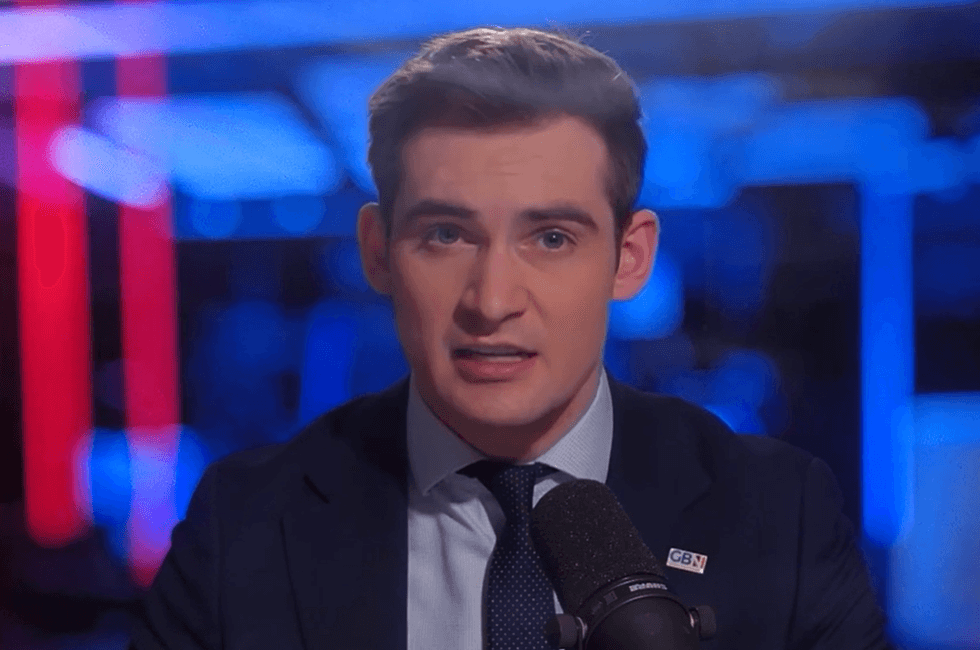
'Make no mistake, Labour's nanny state crackdown could risk tens of billion of pounds - and our children's future,' Tom Harwood warns


Is the era of the free and open internet coming to a crashing halt in the United Kingdom? Are we about to see the most significant expansion of the nanny state this century?

Who sets the rules for our children? Their parents - or Sir Keir Starmer?
Well, on Monday, the Prime Minister stood up and declared that "no platform gets a free pass".
We're talking about a massive crackdown on AI chatbots, a consultation on banning social media for the under-16s entirely, and even state restrictions on what the Government calls infinite scrolling.
Well, the Department for Science and Technology says they're closing loopholes that put our children at risk.
The critics? They say this is the ultimate mission creep for online censorship.
We've been looking at the truth behind the so-called online safety crackdown, why Elon Musk's Grok chatbot is in the crosshairs, why your VPN might be next on the list, and whether a smartphone ban is actually enforceable or just another piece of political theatre.
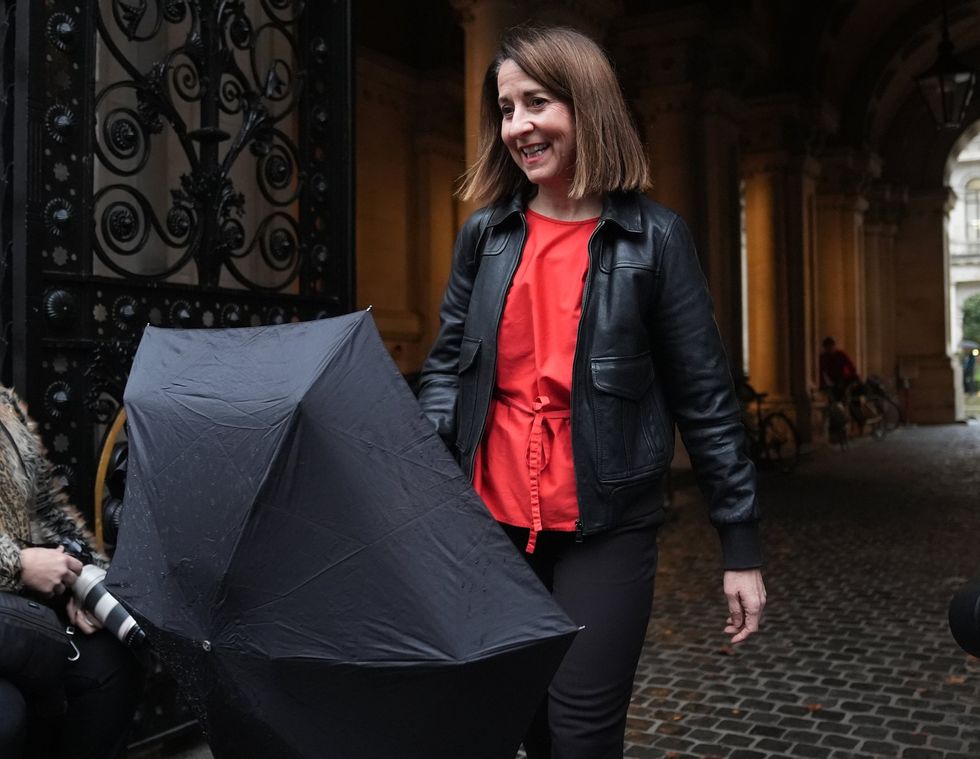
So what actually happened? Well, this week the Prime Minister and the Technology Secretary, Liz Kendall, announced they're effectively supercharging the censorious Online Safety Act.
Now, remember, this Act of Parliament was already one of the most complex and far-reaching pieces of legislation in British history. But the Government says it's already out of date.
Why? All because of artificial intelligence. Yes, the Government now wants a crackdown on "vile" AI-generated content.
We're talking about deepfake imagery and images generating a likeness of someone without that person's consent.
Now the Government is moving to force AI chatbot providers the likes of ChatGPT, Gemini, Claude and Elon Musk's Grok to follow by the same content restrictions as are applied to Facebook or TikTok.
Well, Starmer claims that technology is moving fast and the law has got to keep up.
He's emphasising his personal positions as a dad of two teenagers, talking about the minefield of social media that parents deal with every single day.
But is Keir Starmer the right man to decide what's allowed for your children as well as his?
And are we on the precipice of more severe governmental creep over the wider internet, with Ministers effectively saying we want more power to regulate?
Well, let's talk about the elephant in the room. Of course, the Grok chatbot. A few months ago, the Government called out X over its AI chatbot Grok, after it was used to generate some pretty abhorrent images.
The function was eventually removed, and let's remember that people were effectively jailbreaking the chatbot in order to produce those images, but the Government declared that this must stop.
They realised that while they were regulating posts, the tech sector was moving into generative AI, which is not a forum or a message board, but a private user experience, a different category altogether.
So this new move looks to close what the Government might call an AI loophole. But what others might say is not anything to do with social media at all.
LABOUR'S 'NANNY STATE' CRACKDOWN:
- Education leaders issue major plea to Keir Starmer over 'authoritarian' social media ban
- Scottish Labour backs Australia-style social media ban as ‘young brains not designed’ for overload
- Children's charity boss says 'blunt' Australia-style social media ban will make teenagers less safe
If an AI chatbot helps a child access or create content that the Government decrees to be harmful, the platform executives could, under Government suggestions, face consequences of breaking the law, which includes massive fines and personal criminal sanctions.
Well, for the free speech libertarians among us, this is where the red flags should start waving.
Who defines what is harmful? Who decides what an AI is assisting with?
We've already seen websites blocking war footage from Gaza and Ukraine, rape gang trial transcripts, and even a parliamentary speech from Katie Lam MP. All because they were deemed too graphic, too harmful.
Well, now the regulator Ofcom is being given the keys to regulate the very logic of AI chatbots. But beyond AI, there's a deeper consultation taking place.
The Government is launching a consultation on whether to follow the Australian model on social media bans, a blanket ban on social media for anyone under the age of 16.
What's not widely reported about this Australian model, this Australian ban, is that it doesn't just include Snapchat and Instagram - the sort of social networks that you or I might think are social networks.
It also includes YouTube. Yes. The website which you are watching this video on now is banned for under-16-year-olds to have accounts in Australia.
Well, the Government here is also looking at raising the digital age of consent from 13 to 16, banning addictive features like infinite scrolling, if they so decide, or streaks - now that's a feature on Snapchat so I'm told.
But how would you ban infinite scrolling? Would you demand that you can only scroll for a certain length of time, that you hit a wall after a certain distance scrolled?
Concerningly, the Government is also considering VPN restrictions. Now this is the big one. They want to look at the options to age, restrict or limit VPN use.
But let's be real for a second - how do you limit VPN use? A VPN is a basic tool of privacy for many people. If the Government starts telling you which software you can install on your private device to protect your own data, have we crossed a massive red line in the sand?
And how can journalists or political dissidents even protect their privacy via VPNs if they have to, by law, provide their age and therefore provide their identity to use that very software that's supposed to protect their identity?
It's a can of worms. And as for the social media ban, how do you even enforce it? Do you want a country where every social media user has to upload their passport to Mark Zuckerberg just to see a meme?
It's a logistical nightmare. That sounds great in a press release, but looks like a total privacy disaster even for adults in practice.
Well, a question that often crops up here on air at GB News is, where does the parents' job end and the Government's job begin?
The Technology Secretary, Liz Kendall, says that she's doing this to help parents navigate that minefield. But shouldn't it be the parents deciding if their 15-year-old, for instance, is mature enough for an Instagram account?
By moving towards a blanket ban and safety by design that neuters the internet, are we just infantilising a whole generation and preventing them from building up the skills needed to navigate a complex online world?
Well, even the NSPCC, usually one of the first to call for more regulation, is warning that a blanket ban might not be the answer. They're worried it pushes her tech-savvy children into darker, less regulated corners of the internet, where no Ofcom organisation has any reach at all.
After all, children are often one step ahead of our technophobic politicians.
So what happens next? The consultation launches next month. We're told a decision will be made by the summer.
But make no mistake, 2026 is proving to be the year that the British Government decided to take the world-leading crown for internet regulation - whether that leads to a safer childhood or a more censored Britain is the question that our status as a global technology hub could depend on.
Tens of billions of pounds in investment could be at stake, and the ability of our children to learn how to access the internet safely as they grow up.
But what do you think? Is it time to ban social media for under-16s? Or should the Government stay out of our smartphones?
Our Standards: The GB News Editorial Charter