




Leaders like Donald Trump must not allow terrorists to dictate terms of their survival

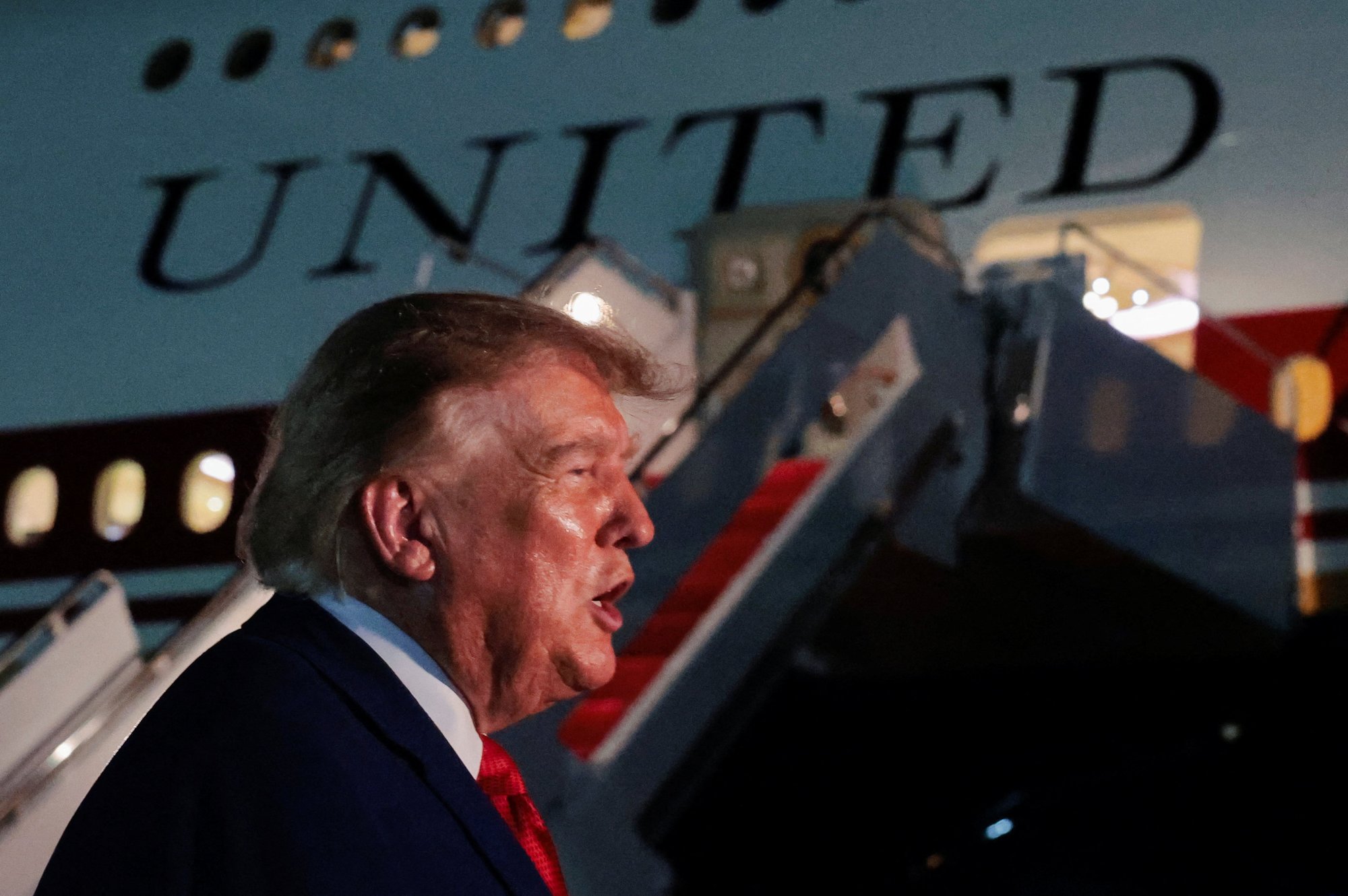
Donald Trump left a Nato summit in Turkey last month by boarding Air Force One in public view, then exiting unseen via a catering truck and transferring to a smaller military aircraft. The reason was a credible Iranian threat involving a man with a shoulder-fired missile. The Secret Service judged the switch necessary. Trump followed their advice.

The subsequent mockery was predictable. Headlines and commentary quickly framed the episode as evidence of personal fear. The image of a president leaving in a catering truck invited easy ridicule. That reaction reveals more about the critics than about the operation itself.
Protecting the President of the United States is not a public-relations exercise. It is a core national-security function. When intelligence indicates a specific threat from a hostile state near a Nato gathering, the correct response is to remove the primary target from the most obvious platform. The alternative — ignoring professional advice to appear unafraid — would have been reckless.
The facts are straightforward. Trump appeared to board the older Air Force One. He was then moved, concealed by an airport catering truck, to a C-32A military aircraft. Journalists and some staff remained on the decoy plane. Trump has confirmed he acted on Secret Service and military direction. He did not claim personal cleverness. He claimed institutional competence.
A president is not required to demonstrate physical bravery by remaining on a higher-risk aircraft. He is required to remain alive and capable of exercising the powers of the office. The American presidency is a strategic asset. Its sudden vacancy through assassination would trigger immediate market instability, test alliance cohesion and invite further probing by adversaries. Continuity of leadership is itself a form of deterrence.
Trump has already shown he does not lack personal courage under fire. After the July 2024 assassination attempt in Butler, Pennsylvania, he stood, bloodied, raised his fist and urged the crowd to fight. That episode is a matter of record. A leader who has absorbed an actual attack and continued is not plausibly acting from cowardice when he later accepts the considered advice of his protective detail. The two situations demand different responses. Both require the same underlying seriousness about the duties of office.
Leaders who take such threats seriously have clear precedents. Margaret Thatcher survived the IRA’s Brighton bombing in 1984. The attack killed five people and came close to decapitating the British government. Thatcher insisted the Conservative conference continue the next morning. The principle was the same then as now: elected leaders must not allow terrorists or hostile states to dictate the terms of their survival or remove them from duty. The methods differ. The underlying responsibility does not.
Iran has long specialised in asymmetric pressure and proxy violence. A Nato summit on Turkish soil, close to Iranian influence, presented a clear opportunity. American intelligence assessed the threat as credible. In those circumstances, deception is not theatrical. It is standard protective practice. The success of the operation is measured by a simple standard: the president left the country alive and continued to govern.

There is a legitimate operational question about how much information was shared with those who remained on the decoy aircraft. That question concerns the design of the security plan. It does not alter the central judgement the president should follow the advice of the people charged with keeping him alive.
Britain has an interest in this episode that extends beyond commentary. The bilateral depends on an American president who remains capable of decisive action. A United States that treats serious threats with seriousness strengthens the entire Western security architecture. Allies benefit when the American commander-in-chief is protected rather than exposed for the sake of optics.
The British parallel is instructive. In recent years the United Kingdom has often appeared more comfortable managing the language of risk than confronting the reality of certain threats. Border security, terrorism and the integrity of national infrastructure have frequently been discussed in terms that prioritise process and perception over decisive control. A political culture that treats precaution itself as the problem eventually weakens the state’s capacity to act.
Security is not required to look elegant. It is required to work. The catering-truck transfer was neither glamorous nor cinematic. It was functional. Trump remained in a position to lead. That outcome matters more than the aesthetics of the exit.
LATEST DEVELOPMENTS
- Hillary Clinton likens Donald Trump's White House to Saddam Hussein in new attack
- JCB boss declares British business is in a 'real mess' as he attempts land speed world record in Utah
- Cambridge 'plagiarism' professor cancels book tour events after publisher admits 'improbable triumphs'

Leaders are not judged by their willingness to stand in the open when professional advice says otherwise. They are judged by whether they preserve the capacity to discharge their responsibilities. In this case the American system functioned as designed. The president accepted the counsel of those whose sole task is his protection. He left Turkey under controlled conditions. He continued in office.
Hardly cowardice, that is the minimum standard of seriousness expected of any leader who holds the authority of a nuclear power and the leadership of a major alliance. Prudence in the face of a credible threat is not weakness. It is the foundation of effective statecraft.
Our Standards: The GB News Editorial Charter