




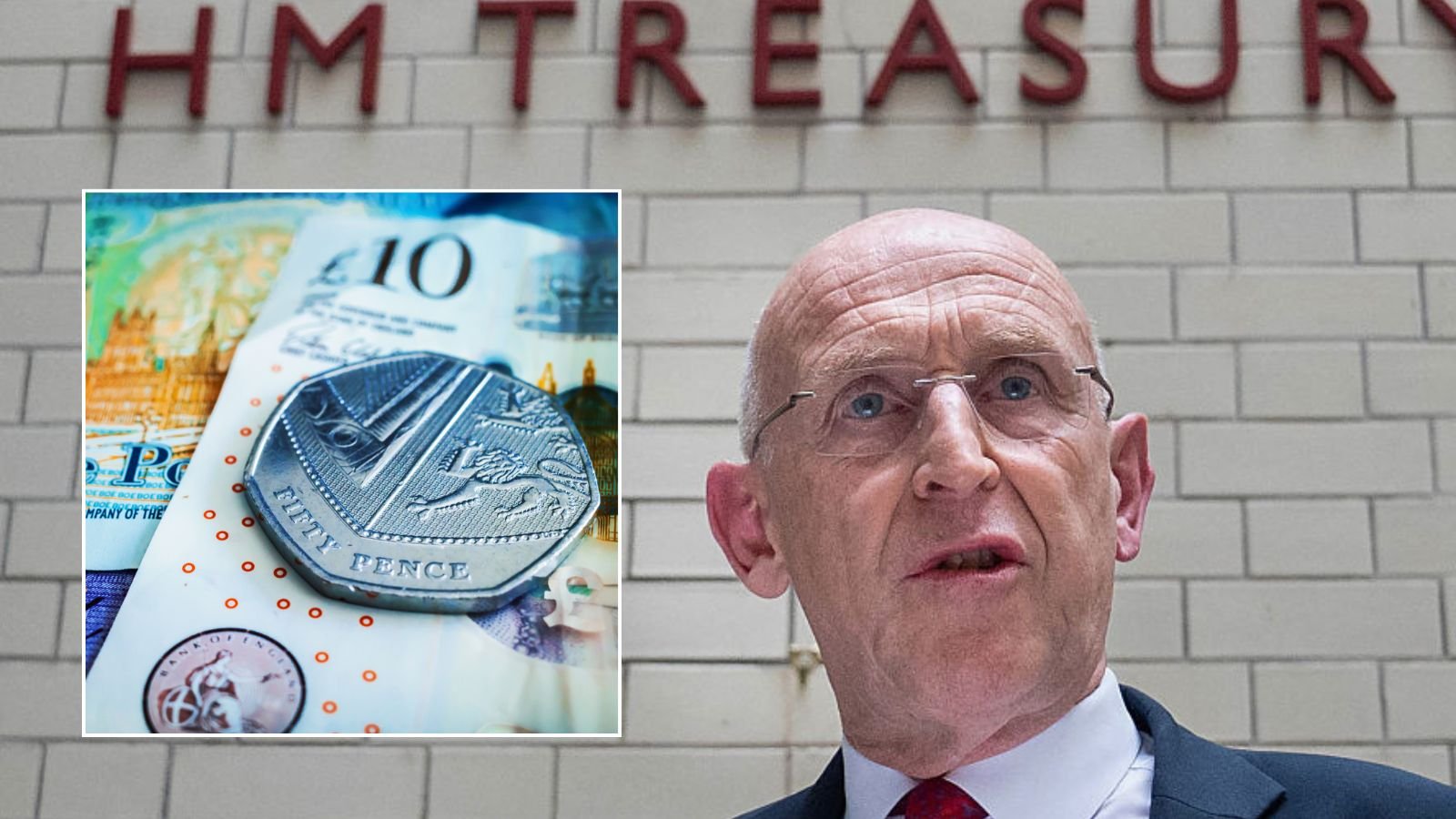



Labour gives taxman new powers to raid bank accounts in bid to recover £4billion


Chancellor John Healey is set to use next week's Budget to grant HMRC (HM Revenue & Customs) new powers to withdraw unpaid tax directly from people's bank accounts.

The measures are designed to recoup approximately £4billion in outstanding debts owed by millions of individuals and businesses who have repeatedly failed to respond to payment demands.
Under the proposed crackdown, HMRC would gain the ability to automatically take sums from both current and savings accounts, targeting those with comparatively modest outstanding liabilities, according to The Times.
At present, the tax authority's power to seize funds directly is constrained by significant thresholds. HMRC can only pursue money from accounts where the debt exceeds £1,000, and must ensure the taxpayer retains a minimum balance of £5,000 once the amount has been recovered.
Ministers believe these limits have effectively shielded a large number of people who knowingly disregard demands for payment, confident that HMRC is unlikely to pursue them for smaller sums.
Chasing such debts through conventional routes like debt collectors is both time-consuming and disproportionately costly.
Under the proposed changes, the minimum debt threshold would be dramatically reduced to as little as a few pounds. Officials would also be empowered to recover accumulated fines and interest alongside the original liability, significantly expanding the scope of what can be clawed back without judicial involvement.
An estimated 4.8 million people and companies each owe less than £10,000, with their collective liabilities amounting to roughly £4billion. For individual taxpayers, the typical outstanding bill stands at just £950.

To determine how much each debtor can realistically afford to repay, the tax authority is exploring partnerships with credit reference agencies.
These organisations would supply data on taxpayers' income and outgoings, enabling HMRC to calculate appropriate monthly instalments.
Earlier proposals indicated that deductions might be limited to no more than half of a person's disposable income. No court approval would be required before withdrawals begin, and the onus would fall on taxpayers themselves to contest any deductions they consider unjustified.
Dan Neidle, founder of Tax Policy Associates, acknowledged the principle was sound but cautioned: "I do have concerns that an automated system is going to struggle to distinguish deliberate non-payment from illness or missed correspondence. It would be good to understand the safeguards that will be put in place."
LATEST POLITICS NEWS
- Autumn Budget 2026: What John Healey could announce for pensions, savings and household finances
- Scottish Greens leader says 'political wing' of Hamas should NOT be proscribed as terror group
- Andy Burnham warns Donald Trump on 'coercive' behaviour by Argentina in Falkland Islands

"There is a real problem with people simply not paying their tax, and the rest of us pick up the bill," he added.
The Association of Taxation Technicians urged HMRC to resolve its own operational shortcomings before wielding such powers.
Jon Stride, chair of the ATT's Technical Steering Group, said: "We have heard of debts being pursued while claims are still outstanding because of HMRC delays or errors, as well as difficulties contacting HMRC to resolve queries."
Fiona Fernie, a partner at tax firm Blick Rothenberg, warned that disagreements between HMRC and taxpayers are frequently far from clear-cut.
"The more direct and possibly automated the recovery process is, the greater the risk that innocent taxpayers get money deducted from their account before the liability question is fully resolved," she said.
Shadow Chancellor Andrew Griffith launched a fierce political attack on the plans, accusing Labour of handing the taxman powers "to empty your bank account over a few hundred pounds and leave you with nothing to pay the rent".
He branded the scrapping of existing safeguards and collaboration with credit agencies "outrageous".
HMRC already possesses a Direct Recovery of Debts mechanism, which permits the seizure of funds from current and savings accounts.
This power existed before the Covid-19 pandemic but was suspended during the crisis and has since been reinstated. Under current rules, once money is seized, there is a 30-day window for debtors to object, during which the funds are held by the bank but frozen.
Debt adviser Claire Cox, who runs the social media page Debt Crisis To Clear UK, has warned that unlike ordinary creditors, HMRC requires no county court judgement before taking enforcement action.
Our Standards: The GB News Editorial Charter