



Keir Starmer's premiership now hangs in the balance due to a dangerous cumulative effect - Christopher Hope

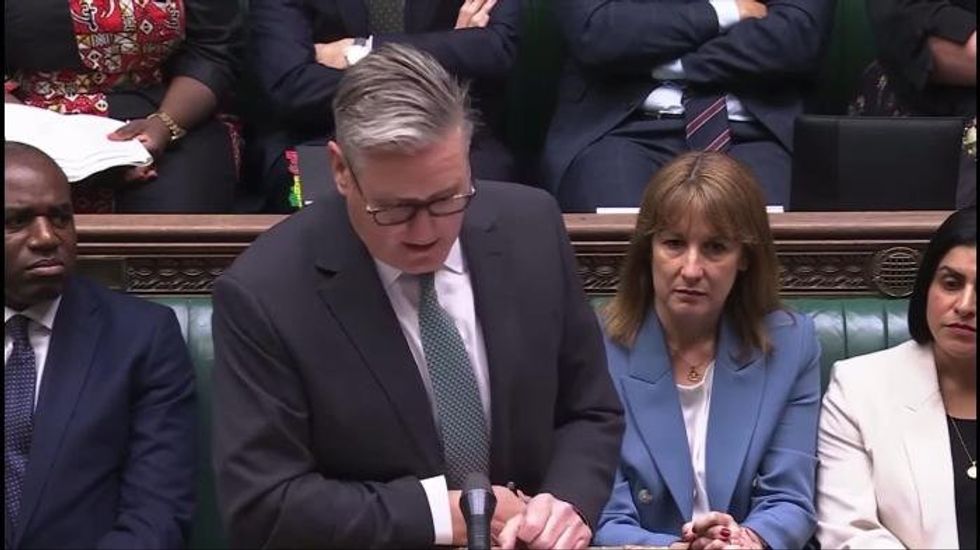
The Prime Minister heads into one of the most important weekends of his premiership, ahead of a week when he must convince MPs he did not mislead them about what he knew about the security vetting of Peter Mandelson.

Is it credible or even plausible that he only found out this week that he did not know Mandelson had failed the Government's security checks - a decision which was overruled by officials in the Foreign Office in January last year. Helpfully for the PM, Mandelson's friends insist he also had no idea.
This matters because Sir Keir Starmer told MPs last September that "due process" was followed. Will this stand up to scrutiny in the House of Commons?
His future hangs on it, according to his own ministerial code, which he signed off on. It says: "Ministers who knowingly mislead Parliament will be expected to offer their resignation to the Prime Minister."
Elsewhere, the Government has begun to look not just divided, but adrift: a group of competing voices without a clear sense of direction.
Over the past month, this impression has hardened that Britain is being steered in the wrong direction by an ever-increasingly out-of-touch Prime Minister.
Consider this chain of events. Deputy Prime Minister David Lammy flies to Washington, D.C. for a last-minute meeting with Vice President JD Vance, a visit that might usually signal constructive talks with Britain’s most important ally, the United States.
All the while, Yvette Cooper, the Foreign Secretary, is left twiddling her thumbs, hardly a sign of a well-run operation.
Then comes the big shock. Days later, Mr Lammy states that a prisoner was released in error every two days over the past 12 months, the sort of announcement that sends a shiver up the spine of most law-abiding members of the community, hardly a sign of being tough on crime on the domestic front.
More like calamity, Lammy. At the same time, across the pond, Chancellor Rachel Reeves criticised the US administration.
Speaking to CNBC, she said: “I’m not convinced this conflict has made the world a safer place”, and in an interview with The Mirror, she took direct aim at President Trump, saying: “I feel very frustrated and angry that the US went into this war without a clear exit plan.”
Elsewhere, the Government has begun to look not just divided, but adrift: a group of competing voices without a clear sense of direction.
Over the past month, this impression has hardened that Britain is being steered in the wrong direction by an ever-increasingly out-of-touch Prime Minister.
Consider this chain of events. Deputy Prime Minister David Lammy flies to Washington, D.C. for a last-minute meeting with Vice President JD Vance, a visit that might usually signal constructive talks with Britain’s most important ally, the United States.
All the while, Yvette Cooper, the Foreign Secretary, is left twiddling her thumbs, hardly a sign of a well-run operation. Then comes the big shock.
Days later, Mr Lammy states that a prisoner was released in error every two days over the past 12 months, the sort of announcement that sends a shiver up the spine of most law-abiding members of the community, hardly a sign of being tough on crime on the domestic front.
More like calamity, Lammy. At the same time, across the pond, Chancellor Rachel Reeves criticised the US administration.
Speaking to CNBC, she said: “I’m not convinced this conflict has made the world a safer place”, and in an interview with The Mirror, she took direct aim at President Trump, saying: “I feel very frustrated and angry that the US went into this war without a clear exit plan.”