





Israelis head to the polls as Benjamin Netanyahu's political future hangs in the balance

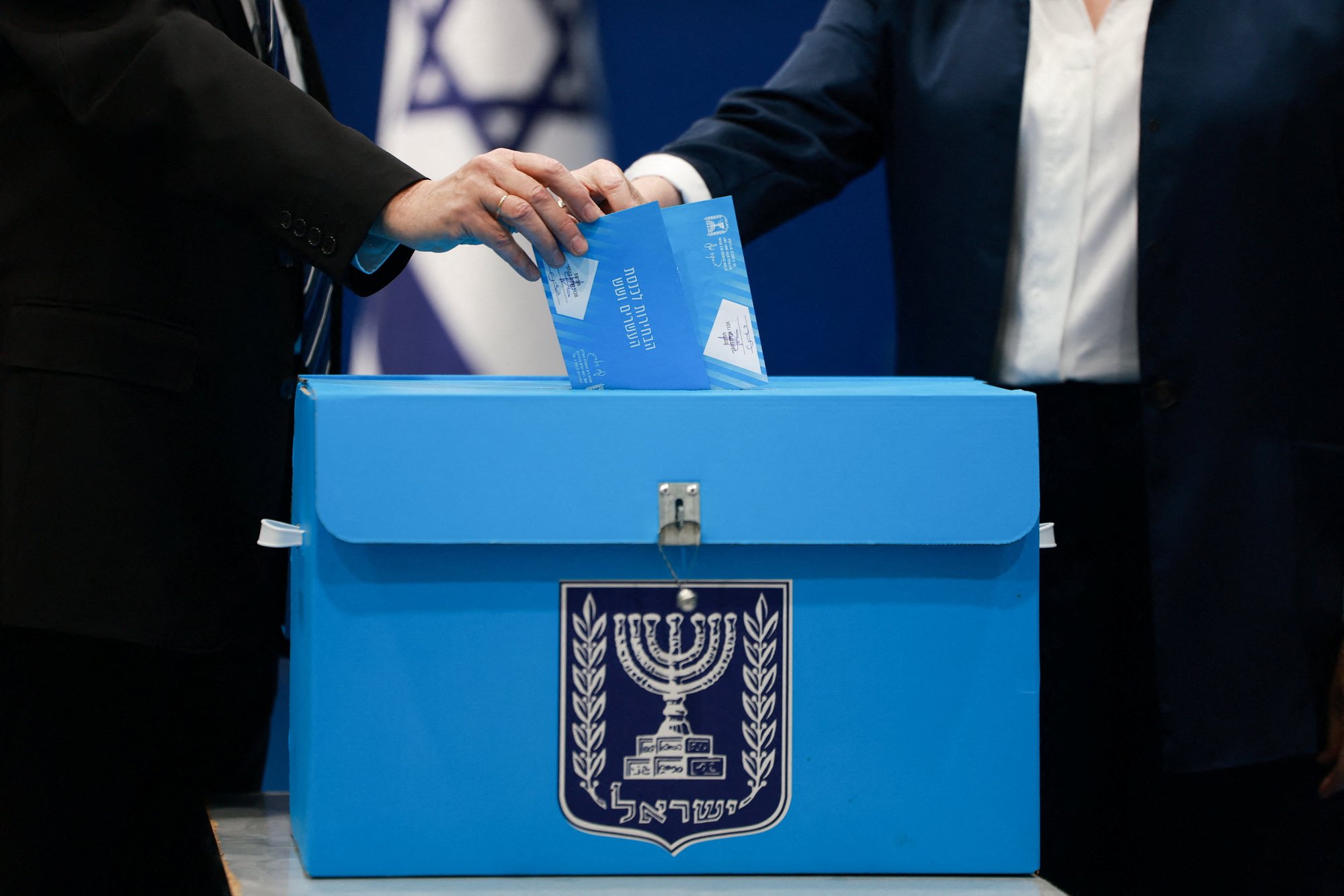
Voters in Israel are heading to the polls in a make-or-break election for Prime Minister Benjamin Netanyahu.

The 77-year-old is Israel's longest-serving leader, having served in the role for 19 years.
However, voters will be weighing his leadership after the 2023 Hamas-led attacks, wars in Gaza and with Iran, and the country's deepening international isolation.
Opinion polls remain on a knife edge between Netanyahu's Likud party and its right-wing allies and a rival alliance led by Gadi Eisenkot, a former IDF chief of staff and security hawk backed by the right and the centre.
The Prime Minister said over the weekend that President Donald Trump was prepared to act again to "finally" remove the Iranian threat, but only if Mr Netanyahu remained in power.
Mr Eisenkot has accused his opponent of "relying on a campaign of fear-mongering, lies and threats," adding that President Trump would work "in full cooperation with any leader chosen by the people."
If neither can form a governing coalition in the 120-seat parliament, Mr Netanyahu could remain in office as caretaker until another election is held next year.
The Israeli Central Election Committee said 7.3 million Israelis are eligible to vote, including some 330,000 for the first time.


The election follows one of Israel's most turbulent periods since its establishment in 1948, shaped by the October 7, 2023 Hamas attacks, Israel's subsequent military offensive in Gaza and deep domestic divisions over the policies of Mr Netanyahu's right-wing government.
The Prime Minister may again depend on hard-right leaders Itamar Ben-Gvir and Bezalel Smotrich to form a government.
Both men have faced international backlash for comments made about Palestinian rights, resulting in sanctions and travel bans.
However, many of Mr Netanyahu's opponents believe the election turns on accountability for the security failures of October 7, Israel's deadliest day.
LATEST DEVELOPMENTS
- Israel orders army to prepare full closure of West Bank as tensions soar after shooting
- Marco Rubio issues demand to Israel over 'disturbing' settler violence in West Bank
- British soldiers tracking Israeli settler 'terrorism' expelled from West Bank after Ed Miliband sanctions

Mali Hajaj, an Education Ministry employee and Eisenkot supporter, said: "The most important thing is the establishment of a national inquiry because that's where our healing will come from."
Lisa Tortor said she hoped Mr Netanyahu would be voted out and "they can form a new government and do some of the repairing of the damage that Bibi [the nickname for the Prime Minister] has done for Jews all over the world and for Israel, and Israel's image."
But Nof Gabay, an 18-year-old Likud supporter, rejected the idea the Prime Minister was to blame for October 7 and called him "the right man for the state of Israel", adding: "Netanyahu managed the war in the best possible way."
Vice-chair of the Young Democrats Erez Uzan said: "There are a lot of people, especially young people, who think that there is no solving the conflict, that we’ll always be at war. There’s a lot of racism, a lot of hatred, but most of all, there’s fear."

David Harel, president of the Israel Academy of Sciences and Humanities, said the rise of hard-right parties among young Israelis is leading the country toward "a bleak future."
He told a rally in the city of Haifa: "We are already in ‘stoppage time’. If we lose this time, there will be no second chance.
"The country we love so dearly will breathe its last. Plain and simple!
"That is why I have come here today, to ask and to implore. And if necessary, I will get down on my knees and beg. Please, please, please! Just go out and vote!"
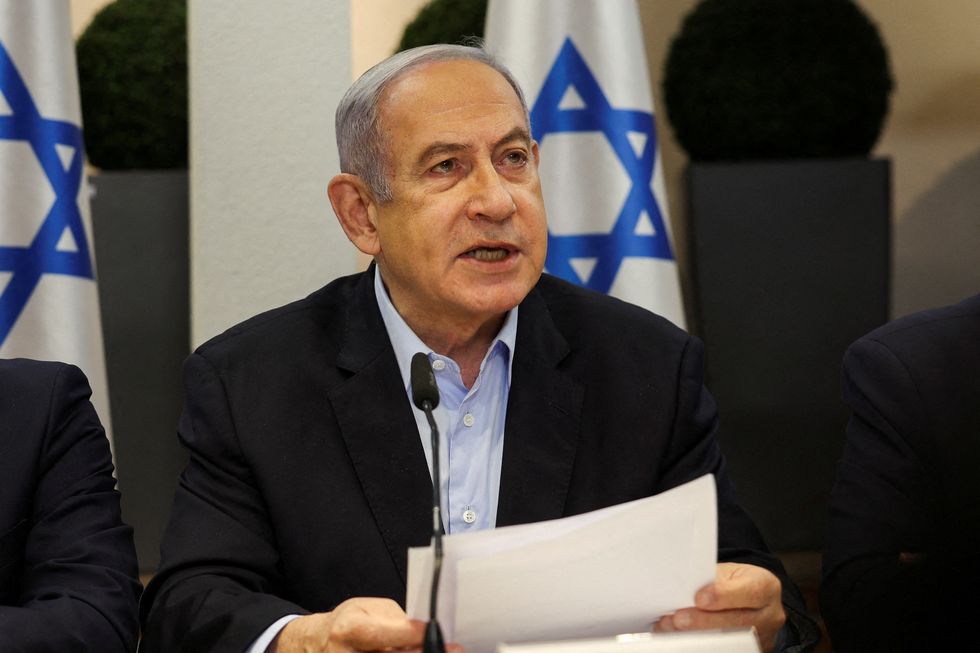

Mr Eisenkot opposes the two-state solution that underpinned decades of peace negotiations with the Palestinians.
But he has criticised Jewish settler violence against Palestinians in the Israeli-occupied West Bank, which has surged since 2023 and strained Israel's ties with Western states, and opposes the coalition with Ben-Gvir and Smotrich.
A high turnout among voters from Israel's Arab minority, Israeli by citizenship but Palestinian by heritage, could help nudge Israel's complex coalition arithmetic in favour of Eisenkot.
Though Mr Eisenkot has ruled out partnering with Arab parties, citing a lack of shared values, analysts see a scenario in which they prop up a minority government he leads to ensure Mr Netanyahu is removed from office.
Senior Israeli political analyst Amotz Asa-El of the Shalom Hartman Institute said: "My expectation is that we will have only a slight majority either way. No landslide."
Our Standards: The GB News Editorial Charter