



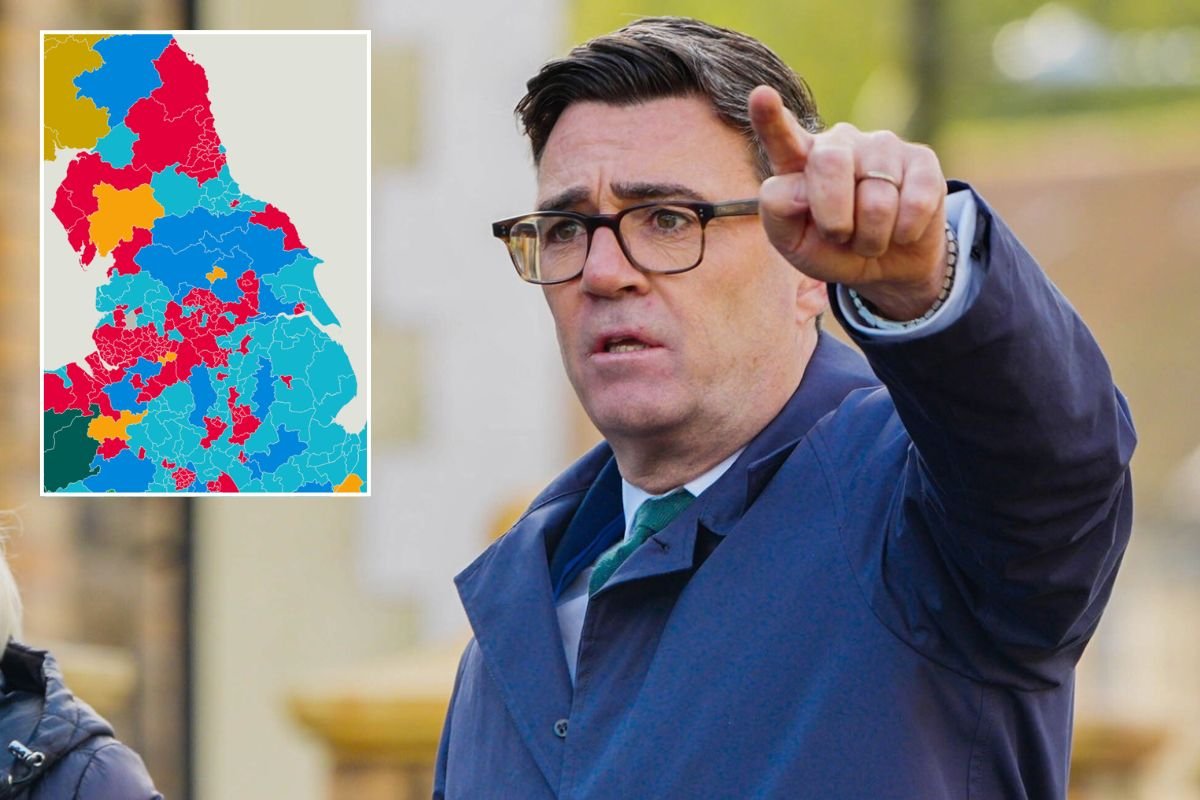


Good luck trying to scrap the triple lock on pensions, Andy Burnham

On a visit to Hong Kong, I got the cultural shock of my life when I came across the practice of bone picking.

Because land is at a premium in our former colony, public cemetery plots can only be leased for up to seven years and families are legally obliged to exhume their loved ones by then so graves can be reused.
The bones are then cleaned with water and rice wine and either placed in a private family mausoleum or ground up for cremation.
It all seemed rather gruesome, but my amused Chinese hosts explained it was a final act of filial piety.
Unlike in the West, their elderly are honoured until they die and even afterwards.
They seemed to think that we were the primitives, given the way we neglect older people.
I am not suggesting Andy Burnham’s new plan to care for the aged should include giving their skeletons a scrub.
But the Prime Minister is right when he says we can no longer struggle with the broken system we have now.

One in seven NHS beds are now occupied by people who do not need them but have nowhere else to go.
That costs £2.7billion a year and contributes to patients languishing in hospital corridors.
We could learn a thing or two from Denmark, where health and social care are properly integrated and free to all without any consideration of financial assets.
In Britain people lose their money if they have more than £23,250 stashed away. Social care is not just about finding more residential places.
LATEST DEVELOPMENTS
- Angela Rayner's office launches Islamophobia 'cover-up' investigation after key documents deleted
- Labour accused of lobbying EHRC to force through 'unworkable' Islamophobia definition
- Muslim campaigners scramble to defend new Islamophobia definition amid 'blasphemy law' fears

Many people can stay in their own homes if they are adapted and there are enough care workers to help with such things as washing and dressing.
And maintaining independent living is the priority for the Danes.
All over 80s and vulnerable 65+ get home assessment visits to check on their needs.
The PM will outline some of his ideas for a National Care Service in his Labour conference speech in Liverpool later today.
He will say “we can’t carry on as we are" and warn: "I accept people will not agree with every part of it."
The part not everyone will agree on is how the £18billion a year it is expected to cost will be paid for and by whom.
No one likes higher taxes, which is how the Danish model is funded.
Which is why speculation is turning towards the pension triple lock, which guarantees a 2.5 per cent increase in pension payments every year if inflation or earnings are below that.
Pensions are 60 per cent higher because of the triple lock, which has been used three times in the last ten years.
According to the Institute for Fiscal Studies, they would have only risen 42 per cent if only linked to CPI inflation and 40 per cent with earnings.
There is a lot of money in abandoning the triple lock, although how much depends on economic conditions at the time.
If pensions were just linked to earnings, that would give the Government between £15billion and £22billion extra a year to play with.
If inflation were to occur, it would be around £10billion by the mid-2030s, rising to £38billion in 2045.
My own preference would be to drop the 2.5 per cent and make the rise based on earnings and prices, whichever is higher, to give a double lock.
That would be fairer to poorly paid younger workers.
And to accompany that with a one-off hefty increase in the state pension to soften the blow and bring it more in line with those paid throughout Europe.
This could only be achieved by a consensus with other parties.
They would need to agree to drop the triple lock from their election manifestoes so it is not a campaigning issue when we next go to the polls.
Good luck with that one, Mr Burnham.
However, if it could be achieved, it would bring something of what the Chinese accord to their elderly relatives – dignity and honour – but without messing about with any bones.
Our Standards: The GB News Editorial Charter