









Borrowing costs jump more than expected as John Healey trapped in 'Burnham fiscal bind'

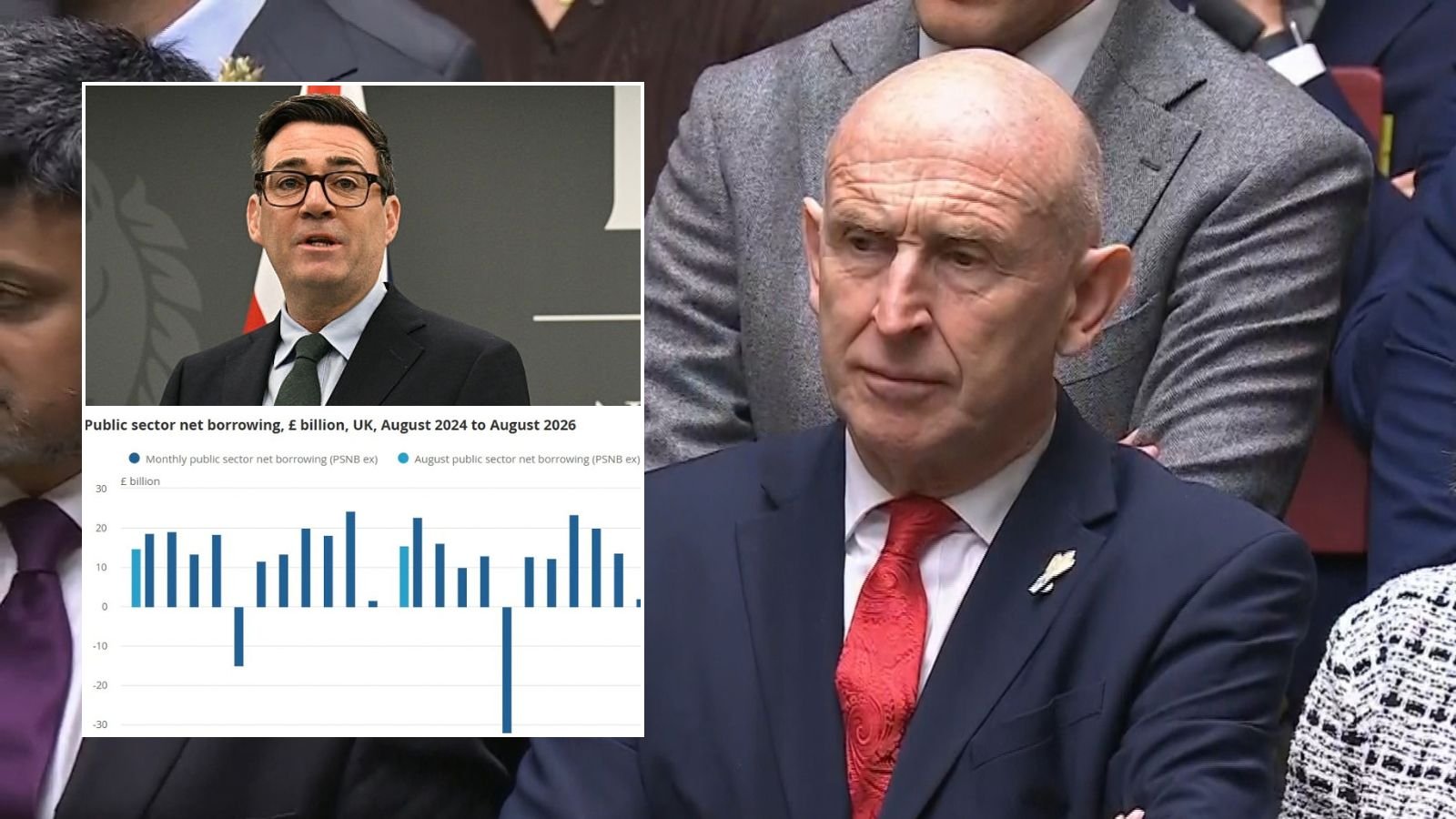
Government borrowing surged to £18.3billion last month, according to the latest figures from the Office for National Statistics (ONS).

This overshoots the Office for Budget Responsibility's (OBR) projection by £3.5billion and heaps further pressure on Chancellor John Healey ahead of his October Budget.
August's figure came in £2.9billion higher than the same month in 2025, driven by expenditure growing at a faster pace than tax receipts.
The City had anticipated borrowing of around £15.6billion, meaning the actual total also significantly exceeded market expectations.

Britain's national debt is now rising faster than forecast, and the Government once again needs to borrow more than projected to keep public finances in order.
Across the first five months of the financial year, total borrowing has reached £77.3billion. While that sum is £2.2 billion below the equivalent period last year, it sits £8.1billion above what the OBR projected.
Relative to the size of the economy, however, the cumulative borrowing figure ranks as the tenth lowest for an April-to-August stretch since comparable monthly records started in 1993.
ONS senior statistician Tom Davies said: "Borrowing in the financial year so far was lower than over the same period last year.

LATEST DEVELOPMENTS
- Store closure 'DISASTER' looms as 100s of corner shops could shutter under price cap plan
- Barclays confirms plans to open new high street branches in major update
- John Healey faces Budget blow as fiscal headroom SLASHED amid weak growth

However, it was higher than the official forecast, largely because central government borrowed more than anticipated."
He added: "On the month, borrowing was up by almost a fifth on last August, as spending increased more than government income partly reflecting the impacts of inflation."
The Government's debt interest bill hit £8.8billion in August, marking the highest figure for that month since monthly records began in 1997.
Of that total, £2.1billion stemmed from index-linked gilts, whose repayments are tied to the RPI inflation rate.

Resources that might otherwise fund schools, hospitals, defence and other demands on the public purse are instead being absorbed by the cost of servicing the national debt.
Susannah Streeter, the chief investment strategist at Wealth Club, said the Chancellor's fiscal constraints have become even more acute.
"The Burnham fiscal bind has wound even tighter, giving him very little room for manoeuvre at the Budget," she warned, adding that only minor adjustments are likely in late October given the absence of headroom for significant spending commitments.
She cautioned that any perception of fiscal looseness would provoke a sharp reaction from bond markets, potentially driving gilt yields higher.
Our Standards: The GB News Editorial Charter