

Andy Burnham's U-turn on EU free movement may prove irreparable with working-class voters

The date: December 7, 2016. The venue: House of Commons.

A Labour backbencher rises during a debate on Brexit and, in a short but powerful speech, confronts his fellow MPs over an issue that, for many of them, has become an article of faith.
“The status quo for free movement was defeated at the ballot box,” he tells them. “In an era of increasing globalisation, free movement has arguably been providing greater benefit to larger companies than it has to the most deprived communities.”
Then, in a rebuke to his own party colleagues, he says: “There is nothing socialist about a system of open borders that allows multinationals to treat people as commodities and move them around Europe to drive down labour costs and create a race to the bottom.”
The MP also aims his fire at all those seeking to overturn Brexit, telling them: “It is time to move beyond the re-running of the referendum arguments and accept what people voted for.”
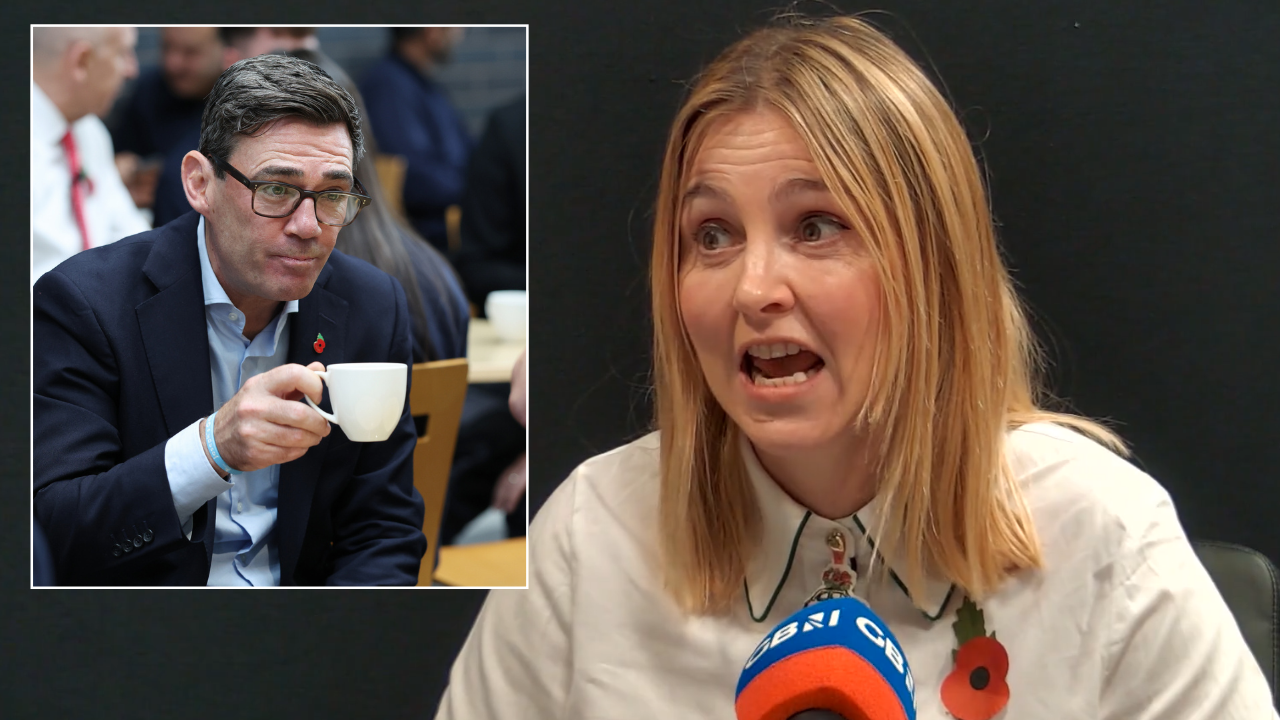
So, who was this bold speaker? Why, none other than our current Prime Minister, Andy Burnham.
To an old school, pro-Brexit leftist like me (yes, we do exist), speeches such as Burnham’s were, during those febrile times, music to the ears. For they showed not everyone in the Labour Party had caught the open-borders bug.
There is indeed nothing socialist about free movement. On the contrary, the labour supply was once understood by most on the Left to be a market dynamic which, like all market dynamics, needed to be subjected to strict regulation, the better to allow governments to plan around employment, housing and welfare, and to prevent downward pressure on wages.

The open-borders position was, by contrast, the preserve of fringe voices – anarchists, Trotskyists and the like – who were not taken seriously. But as the Labour movement’s love affair with the EU began to blossom, that all began to change. Support for free movement began to be seen as the ultimate high-status marker, while opposition to it put one squarely in the camp of those horrible far-right populists.
Burnham’s speech in the Commons 10 years ago was thus a refreshing reminder of the Labour movement’s historical position on this issue. So how depressing he has now disavowed his own eminently sensible words and is making the case for free movement as part of a broader strategy to place Britain back under the yoke of Brussels.
Does Burnham think free movement has somehow become a socialist ideal in the past decade? That everything he said about its negative impact on deprived communities no longer applies? That it is a good idea to return to a system that allows bosses to shunt workers from low-wage to high-wage economies in a bid to save on labour costs?
Sure, such a U-turn might go down well among well-heeled urban liberals who will never know what it’s like to suffer the effects of wage depression caused through an oversupply of labour and whose professional status may grant them the opportunity to live and work abroad. But try making the argument to someone from a hard-pressed corner of post-industrial Britain who experienced none of the upsides of free movement but only its drawbacks.
LATEST DEVELOPMENTS
- Nigel Farage skipped Budget following 'physical altercation' with MP
- John Healey doesn’t blame Brexit for slow UK growth – Chancellor’s six biggest Budget announcements
- Andy Burnham's Brexit U-turn sparks Cabinet civil war as PM undermines Shabana Mahmood again
It beggars belief, at a time when immigration continues to be a running sore in British society – not least because of the State’s inability to control the nation’s borders – anyone in Government should think it a wise idea to throw open our doors to 450 million citizens across Europe. And, by the way, that figure now includes around 3.5 million people from countries such as Syria, Afghanistan and Iraq who, since Britain left the Single Market in 2020, have been granted an EU passport and would, if free movement were to return, have the right to move to Britain.
One does not need to be some rabid racist or possess the powers of a clairvoyant to believe that a new influx of migrants would, in the current economic and social climate, heap further pressure on our creaking infrastructure, deepen existing social tensions, and exert further downward pressure on wages across a number of industries.
The Prime Minister might also want to consider such a development would almost certainly lead to a draining of support in Labour’s traditional working-class heartlands – just as the calamitous second referendum policy did at the 2019 general election – with Nigel Farage and Reform the most likely beneficiaries this time around.
This is a reality which some "Red Wall" Labour MPs have recognised. In some cases, these MPs were passionate Remainers. But they know any return to free movement would go down like a lead balloon in their constituencies.
Burnham would do well to heed the words of Melanie Onn, for example. Onn, who campaigned for Remain in the referendum, represents Great Grimsby and Cleethorpes, where around 70% of the electorate backed Leave. Of the proposed return to free movement, she wrote earlier this week: “Freedom of movement was one of the defining issues of the ‘once in a generation’ Brexit referendum. For many, it raised fundamental questions about immigration, contribution and fairness. These concerns have not simply disappeared.”
Onn also quite properly reminded her leader that Labour’s manifesto at the 2024 general election explicitly ruled out a return to free movement.
Burnham tries to persuade us that leaving the EU has made it harder to control immigration numbers. That is gaslighting of the highest order. While it is true that the number of arrivals went through the roof after Brexit, that was the consequence of government failure – or, in some cases, deliberate policy choices – and not because Britain was no longer in the Single Market. It is, in fact, a gross insult to suggest to 17 million Leave voters their decision somehow made phenomena such as the “Boriswave” inevitable.
Burnham would be utterly foolish to rip the scab off a wound that was slowly beginning to heal. There is no case economically, electorally or otherwise for a return to free movement.
The Prime Minister should, on this issue, prioritise the wishes of working-class communities in the post-industrial north and Midlands over those of the metropolitan liberal class. Anything else would be certain to cause a new and massive rupture between the Labour Party and its Red Wall base. And this time it may prove irreparable.
Our Standards: The GB News Editorial Charter