







Andy Burnham ordered to approve Rosebank – because EU is desperate for OUR oil

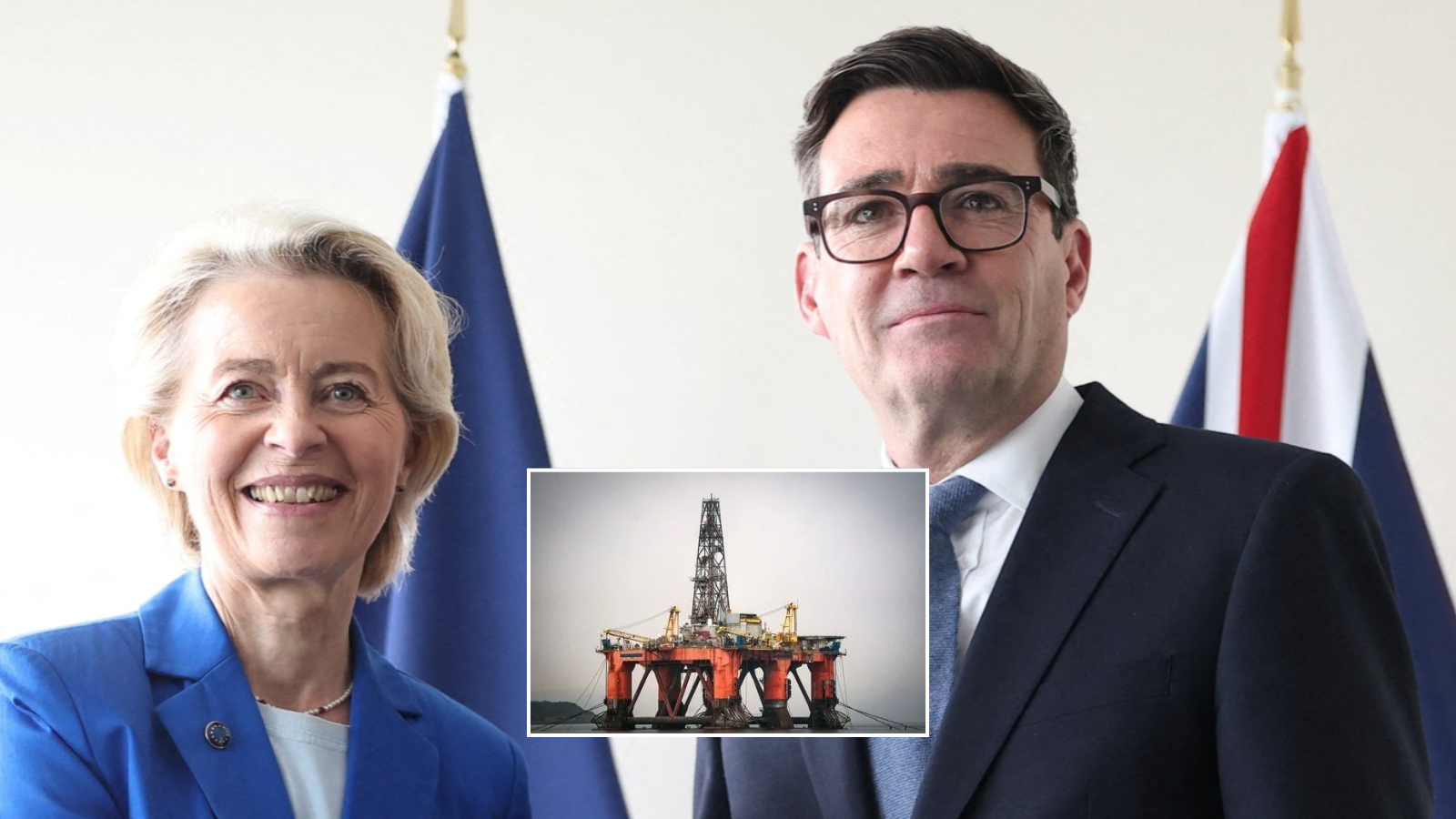
Andy Burnham should approve the Rosebank oilfield immediately – because the European Union is desperate for Britain's oil.

With the world in the grip of an energy crisis, greenlighting the giant field "would strengthen the security of the UK and its European neighbours alike", a report from consultancy group PF Global finds.
Britain's role in supplying European refineries is a "strategic asset" and a lever the Prime Minister can pull when the crunch talks come on November 20, the authors say.
Norway has "built much of its relationship with Europe on being a reliable and significant supplier" of energy, says the report, commissioned by North Sea energy firm Adura, which operates Rosebank.
"The UK should be making a comparable case in its own interest as the Government negotiates further with European partners", it says.
But it should lean more heavily into its North Sea assets.
Unlike Norway, Britain has faced claims it is turning its back on North Sea oil and gas.
Last week, Labour introduced legislation to ban new drilling licences, and operators face a headline tax of 78 per cent on profits.

However, this comes at a cost, says the UK-European Oil System report, warning: "Failing to sustain North Sea output weakens UK and European fuel security."
Rosebank is Britain's largest untapped oil field, with an estimated 300 million recoverable barrels.
However, work there has stopped after a legal challenge on climate grounds.
Opponents argue because the oil recovered will be sold on international markets, drilling at Rosebank will damage the climate without benefitting Britain.
LATEST DEVELOPMENTS
- Gas power station paid over £1million an hour to keep electricity grid running as wind output plummets
- Britain's wind power plunge shows gas is vital to keeping lights on, experts warn
- Andy Burnham refuses to rule out EV target U-turn as MPs consider Net Zero car sales mandate slash
Yet the PF Global report says this ignores the fact Europe needs our oil.
“The UK’s oil security is often discussed as a national question,” it says. “This is true, but it should also be considered as a continental arrangement with the UK’s interest at heart.”
While the UK exports more than 80 per cent of its crude, 86 per cent of these exports are destined for European refineries.
Many of the refined products return to the UK, including, crucially, diesel, which Britian struggles to refine in sufficient quantities.
Further, the shipments do not have to pass through any dangerous chokepoints, such as the Strait of Hormuz.
The UKCS provides up to 12 per cent of EU crude supplies and the report warns: "If North Sea supply falls, Northwest European refiners face increased supply risks."
This could lead to drawing on reserves or importing from the United States – which recently threatened a ban on diesel exports – the Middle East and even Russia.
This made the energy security offered by the North Sea a strong card in the approaching European negotiations, the authors say.
Britain could present "UKCS oil production as a contribution to shared resilience ahead of the UK-EU summit".
Nevertheless, it warns: "That case is weakened if the UK is seen to be running down its own production before getting to the table... Every barrel the UKCS continues to supply is one that Northwest European refiners do not need to source from the US, the Gulf or Russia."
Rosebank could prove central, argues the paper.
"Its value lies in adding a significant volume of trusted crude to the North Sea system at a time when the alternatives are under strain and reserves need to be replenished.
"This could have a notable effect of reducing the UK and Europe's exposure to future shocks, if well implemented."
It concludes: "Few levers are available to the UK in a supply crisis.
"Withholding consent for Rosebank would relinquish one from that limited supply unnecessarily.
"Developing it, and sustaining the shelf behind it, would strengthen the security of the UK and its European neighbours alike."
Sam Chivers, associate director at PF Global and the lead author of the report, said: "As geopolitical tensions rise, the UK has a choice: to strengthen its reliable partnership with Europe and mitigate the risks of serious future shocks or to further expose itself to the significant import risks we have seen this past month.
"In both scenarios, the country must continue its energy transition, but approving Rosebank now can provide certainty that the system so dearly needs."
Climate groups remain opposed to Rosebank. Uplift, which campaigns for an end to the use of fossil fuel, has said the field "doesn't really do anything for energy security".
Executive director Tessa Khan said: "What it does do is send a very dangerous signal about the UK's seriousness about addressing climate change after the summer that we've just had."
A spokesman for the Department for Energy Security and Net Zero said: “The North Sea remains a vital national asset and oil and gas will continue to play an important role in our energy system for decades to come – alongside transitioning to clean power to protect jobs and tackle the climate crisis.”
Our Standards: The GB News Editorial Charter